⏱️ Prep: 15 mins | 🔥 Cook: 25 mins | 🥞 Servings: 4 | ⚖️ Calories: ~480 kcal | ✅ Difficulty: Medium
Hi, welcome everyone to YumsJunction. In this post, I am gonna show you how to take a cabbage, and turn it into something very special.
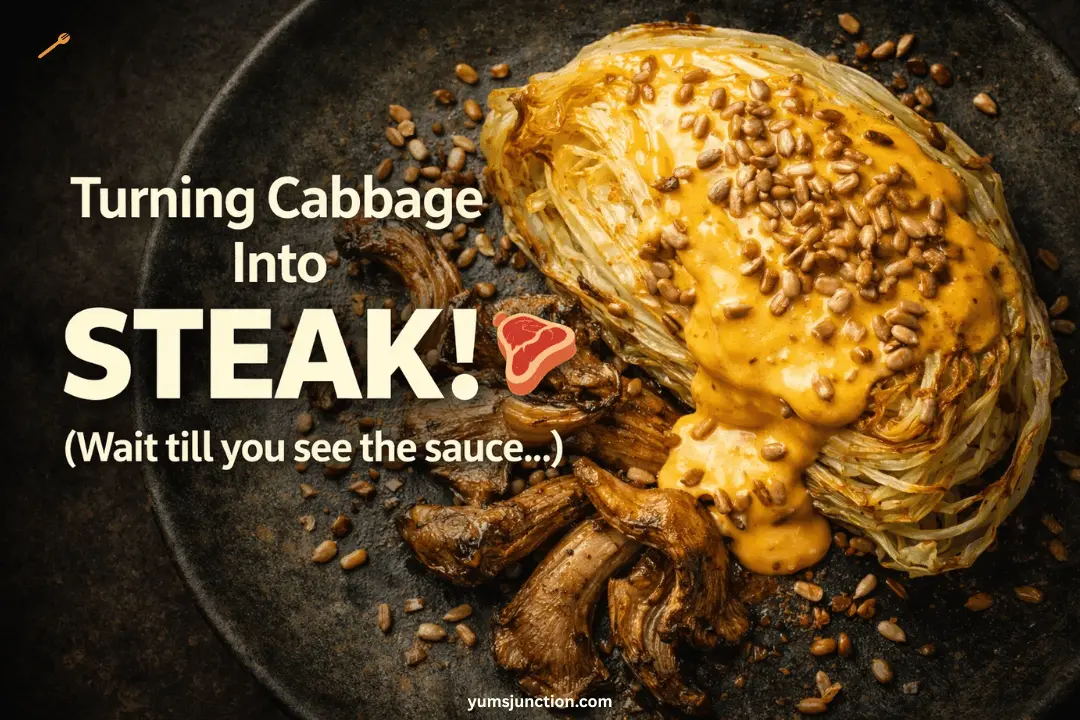
We’re more or less treating this vegetable exactly like a steak. We’re talking hard sears, lots of fresh thyme, and basting it in an ungodly amount of butter. Then, we’re taking all that beautiful, browned, cabbage-infused butter and whisking it into a savory Miso Sabayon.
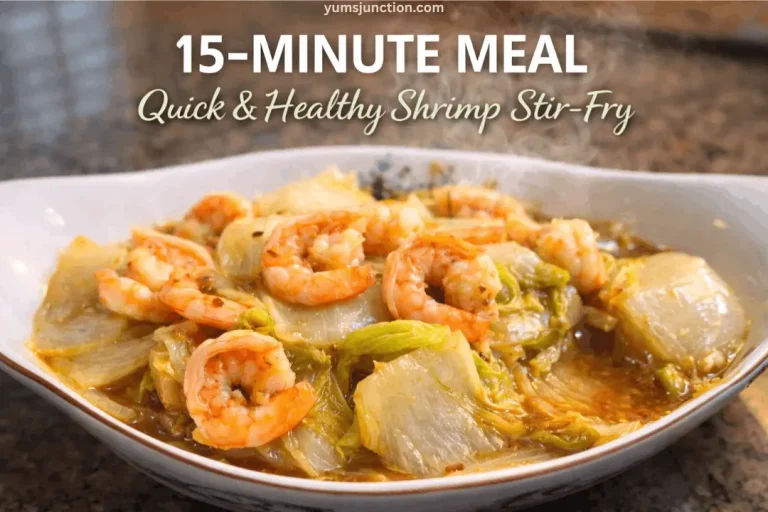
And if you’re as into cabbage as I clearly am, you’ll also love my Super Quick & Easy Stir-Fried Napa Cabbage with Shrimp! and Fun & Fabulous Warm Cabbage and Lentil Soup for cozy weeknight dinners.
Table of Contents
Why You’ll Love This
Because mushrooms and cabbage just make sense. Because we’re treating a humble vegetable with the respect of a ribeye. It’s sweet, it’s tender, it’s savory, and it’s going to make you completely rethink what cabbage can do.
If this recipe makes you rethink cabbage, definitely check out my Cabbage Dumplings and hot and Spicy Cabbage Soup too—they’re totally different vibes, but just as comforting.
What You’ll Need
Special Equipment Needed:
- Stainless steel skillet
- Tongs or a spatula (do as I say, not as I do—don’t use your hands!)
- Small pot and a heatproof glass or metal bowl (to create a double boiler/bain-marie)
- Whisk
The Ingredients:
- 1 small/medium Green cabbage
- 150g (about 5 oz) Oyster mushrooms, torn or cut in half
- 2 tablespoons Sunflower seeds (for toasting)
- 1 tablespoon Olive oil
- 1 tablespoon Sunflower seed oil (or other neutral high-heat oil)
- 215g (about 1.9 sticks) Unsalted butter, divided (15g for mushrooms, 200g for cabbage)
- 3–4 sprigs Fresh thyme, divided
- 3 large Egg yolks
- 1 tablespoon + 1 teaspoon White miso paste, divided
- 1 teaspoon Apple cider vinegar
- 1–2 teaspoons Fresh lemon juice
- 1/2 teaspoon Honey
- 1/8 teaspoon Cayenne pepper (just a dash)
- Salt, to taste
Let’s Get Cooking!
1. Prep the Cabbage
You can use most types of cabbages, just make sure it’s not too big. Core your cabbage and split that into quarters. Each wedge will feed one person.
2. Prepping the Sides & Garnish
First, toss your sunflower seeds into a dry pan over medium heat. Toast until lightly golden and fragrant, then set aside for your garnish later.
For the oyster mushrooms, they are going to get a very simple treatment. All you need to do is split them in half and throw ’em in some hot olive oil over medium-high heat. A pinch of salt goes in for seasoning and to draw out the moisture. Oyster hats have a relatively low water content, which means they’re gonna start picking up color very fast. Once nicely browned, you are gonna throw in a sprig of fresh thyme and a 15g knob of butter. Toss to coat, remove from heat, and set aside. Keep it simple, these are delicious.
3. The “Mercury Test” for Stainless Steel
Now, back to the cabbage! Heat your stainless steel pan. You’ll know it’s heated up to non-stick temperature when you splash a tiny bit of water and the drops start dancing on the surface like mercury. Hence why they call this the mercury test! At just above 200°F (or 93°C), the Leidenfrost effect takes place. A liquid that comes into contact with a significantly hotter surface produces an insulating vapor layer. That prevents it from boiling rapidly and essentially makes it non-stick. Add your 1 tablespoon of sunflower seed oil.
4. Treating Cabbage Like A Steak
Place the cabbage wedges in the pan and begin searing. Once the initial side gets nicely caramelized, use anything but your hands to flip the wedges! (Do as I say, not as I do). At this stage, feel free to throw in a generous pinch of salt.
5. The Ungodly Baste
Once all sides are seared, start basting with butter. Lots of butter. And a couple sprigs of fresh thyme. Use 100 grams of butter, which you are gonna start spooning over and into that cabbage as soon as it starts melting. Once completely melted and slightly brown, add another 50, and another 50 grams of butter! For a total of 200 grams of butter! That’s almost a whole pack!
6. Rest (and Save That Butter!)
To check for doneness, a sharp knife should go in without much resistance. Remove the cabbage to a board and let the cabbage rest, just like you would a steak.
Crucial step: Pour all of that gorgeous, browned, thyme-infused butter from the pan into a glass measuring cup or bowl. Do not throw it away! You gonna use it for your sabayon.
7. Separate the Yolks
While the cabbage is resting, you can start preparing the final element: the sabayon. You need to separate three egg yolks. One way to do it is to crack the egg in the palm of your hand and transfer it from one hand to the other until all of the egg white slips through your fingers, just like your dreams. Another way, which is a little bit more advanced, is to use the two halves of the shell.
8. Start the Sabayon
Make the sauce on a water bath. In a small pot, add about an inch of boiling water, and put a heatproof bowl on top so the steam gently heats it from below (make sure the bottom of your bowl doesn’t touch the water). In go your three egg yolks and 1 tablespoon of white miso. Give it a quick whisk until smooth, then whisk in the apple cider vinegar.
9. Emulsify the Brown Butter
As you continue whisking vigorously, slowly start drizzling in that leftover brown butter from the cabbage pan. It’s basically like making warm mayonnaise. As you keep whisking and adding more fat, the mixture’s gonna froth and thicken up. The more fat you add, the thicker it becomes.
10. Final Tweaks
Remove the bowl from the heat. Once I took mine off the heat, I realized it was a bit too thick, so I loosened it up with a splash of lemon juice. Mixed that in, tasted it, and added another 1 teaspoon of miso for saltiness. Now, this is optional, but I like to add a little bit of honey and a dash of cayenne. You’re not really gonna taste either, but you’re gonna know they’re there.
11. Munch!
Serve these individually, or build a massive sharing platter. Plate the cabbage wedges, spread those beautiful oyster mushrooms around the cabbage, and aggressively spoon that warm miso sabayon all over everything. Top with your toasted sunflower seeds. The cabbage maintains a bit of a crunch, the mushrooms are perfectly savory, and the sabayon brings it all together.
If you like this recipe Explore more recipes
FAQs
How do I know if my stainless steel pan is actually non-stick?
You want to use the u0022mercury test.u0022 Heat the pan dry, then splash a tiny drop of water onto it. If it sizzles and evaporates immediately, it’s not ready. If the water drop balls up and dances around the surface like liquid mercury, you’ve hit the Leidenfrost effect! Add your oil now, and your pan will essentially act as a non-stick surface.
Do I need to wash oyster mushrooms before cooking?
Please don’t soak your mushrooms! They have a low water content naturally, which helps them brown quickly in the pan. If you soak them, they’ll just steam and get soggy. Just brush away any visible dirt or wipe them with a very slightly damp cloth right before tossing them into the hot oil.
Why did my sabayon separate or scramble?
Making sabayon is a balancing act! If it scrambles, your bowl got too hot—make sure the bottom of your bowl isn’t actually touching the simmering water in your double boiler, and keep whisking constantly. If it breaks or separates, you might have added the butter too quickly. Drizzle it in slowly like you’re making mayonnaise.
What’s the difference between sabayon and zabaglione?
They are essentially the exact same technique! Sabayon is the French term, and Zabaglione is the Italian term. Traditionally, they are sweet egg-yolk desserts made with wine (like Marsala or Champagne). We’re just taking that same genius whisking technique and making it savory with brown butter and miso. Because tastebuds!
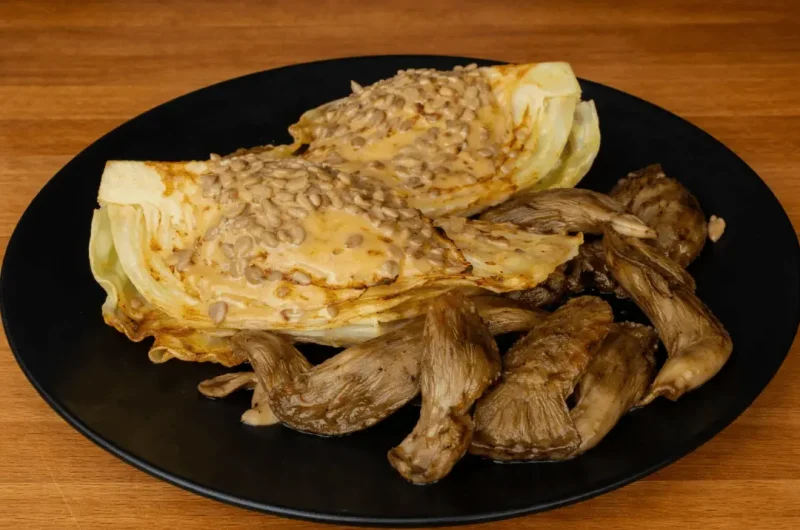
Pan-Seared Cabbage with Oyster Mushrooms & Miso Sabayon
Course: MainCuisine: ModernDifficulty: Medium4
servings15
minutes25
minutes480
kcal40
minutesTurn humble cabbage into an absolute showstopper! Pan-seared like a steak, basted in brown butter, and topped with crispy oyster mushrooms and a rich, tangy miso sabayon.
Ingredients
- Equipment Needed:
Stainless steel pan
Tongs
Small pot
Heatproof bowl
Wire whisk
- Full ingredients list:
15 g (2 tbsp) sunflower seeds
150 g (5 oz) oyster mushrooms, halved
15 ml (1 tbsp) olive oil
Salt, to taste
4 sprigs fresh thyme, divided
215 g unsalted butter, divided (15g for mushrooms, 200g for cabbage)
1 small/medium green cabbage (~800g), cut into quarters
15 ml (1 tbsp) sunflower seed oil
3 large egg yolks
20 g (1 tbsp + 1 tsp) white miso paste, divided
5 ml (1 tsp) apple cider vinegar
10 ml (1–2 tsp) lemon juice
3 g (1/2 tsp) honey
1/8 tsp cayenne pepper
Directions
- Place a dry skillet over medium heat. Add the sunflower seeds and toast, stirring or shaking the pan occasionally, until they smell nutty and turn lightly golden. Transfer the seeds to a small bowl and set aside to cool.
- In the same or a separate skillet, heat the olive oil over medium-high heat. Add the halved oyster mushrooms in a single layer and sprinkle with a pinch of salt. Cook, stirring occasionally, until they release a little moisture and become deeply browned on the edges. Add 1 sprig of thyme and 15g (1 tbsp) of butter. Toss the mushrooms in the melted butter and thyme until coated, then remove from the pan and set aside.
- Place a clean stainless steel pan over medium-high heat and let it preheat until very hot. Test by flicking a tiny drop of water into the pan—if it dances and skitters around like mercury, it’s ready. Add the sunflower seed oil and swirl to coat the bottom.
- Add the cabbage wedges to the hot pan, cut sides down. Let them sear without moving them until the underside is deeply caramelized and browned. Carefully flip each wedge using tongs and repeat on the other cut sides, searing until all exposed sides are nicely colored. Season the cabbage all over with salt while it cooks.
- Once the cabbage is well seared on all sides, add 100g of butter and the remaining thyme sprigs to the pan. As the butter melts and begins to foam, tilt the pan slightly and use a spoon to continuously scoop up the foaming butter and pour it over the cabbage wedges. Add the remaining 100g of butter in two additions (50g at a time), continuing to baste as it melts, until the cabbage is tender enough that a knife slides in with little resistance.
- Transfer the cabbage wedges to a plate or board to rest, just like you would with a steak. Carefully pour all of the browned, thyme-infused butter from the pan into a heatproof container and set it aside—you’ll use this for the sabayon.
- To make the sabayon, set up a double boiler: add about 1 inch of water to a small pot and bring it to a gentle simmer. Place a heatproof bowl on top of the pot, making sure the bottom of the bowl does not touch the water. Add the egg yolks and 1 tablespoon miso paste to the bowl. Whisk until the mixture is smooth and evenly combined.
- Whisk the apple cider vinegar into the yolk and miso mixture. Then, while whisking constantly, slowly drizzle in the reserved warm brown butter from the cabbage pan. Add the butter in a very thin stream, whisking the whole time, until the sauce thickens, becomes frothy, and reaches the texture of warm mayonnaise.
- Remove the bowl from the heat. Whisk in the lemon juice to loosen the sabayon slightly. Add the remaining 1 teaspoon miso, the honey, and the cayenne pepper. Whisk again until everything is fully combined and the sauce is smooth and glossy. Taste and adjust salt if needed.
- To serve, arrange the rested cabbage wedges on a serving plate or platter. Scatter the sautéed oyster mushrooms around and over the cabbage. Generously spoon the warm miso sabayon over the top of the cabbage and mushrooms. Finish by sprinkling the toasted sunflower seeds over everything, then bring it straight to the table and enjoy.
Notes
- Storage: Sabayon does not keep well and can deflate/separate in the fridge. This dish is meant to be devoured immediately!
- Mushroom Prep: Don’t wash your oyster mushrooms under running water! Wipe them with a slightly damp cloth. They act like sponges, and we want them to brown fast, not steam.
- Flipping Pro-Tip: use tongs to flip the cabbage wedges. Hot oil and butter hurt.
- The Sabayon Fix: If your sabayon gets too thick on the double boiler, don’t panic. Taking it off the heat and whisking in a splash of lemon juice (or even just warm water) will fix the consistency perfectly.