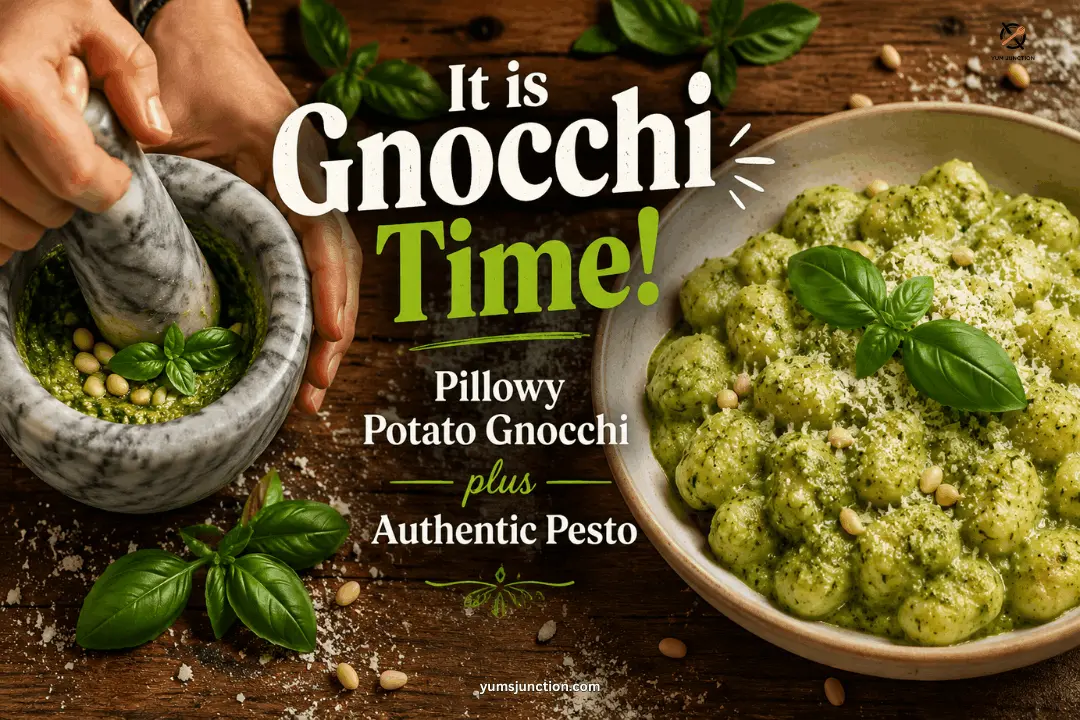
Potato gnocchi are soft, cloud-like Italian dumplings made by ricing cold roasted potatoes, mixing them gently with flour, egg, and seasoning into a barely-worked dough, then shaping into ridged pillows and boiling until they float. This version pairs them with a traditional Pesto alla Genovese made in a mortar and pestle with fresh basil, pine nuts, garlic, and Pecorino Romano.
It is gnocchi time! The first thing that is important to know is that gnocchi is not just one recipe. It is a family of recipes. You can make gnocchi out of many different things. You can have gnocchi di zucca (butternut squash), you can use courgette, or you can make gnocchi di patate, which is the classic potato gnocchi we are making today.
Remember, when you make gnocchi, you try to put as little flour as possible. You do not want them to be al dente like you would with normal pasta. You want them to be soft, like a cloud in your mouth, melting. That is exactly why it is very good to use roasted potatoes. I personally like the ones with the red peel because they are floury, meaning you can actually use less flour to make your gnocchi.
Table of Contents
Why You Will Love This Potato Gnocchi Recipe
You are going to love this because it is actually a beautiful activity to do as a family. You do not need fancy equipment to make amazing food, and you do not need a heavy sauce to make it taste good. We are making a traditional pesto from Genova using a mortar and pestle, which gives you all these incredible and crunchy textures. Plus, homemade gnocchi are so much lighter than anything you buy in a shop. It is a fun, messy, and fantastic process, and the result is absolutely smashing!
If you love making things from scratch by hand like this, you are going to absolutely fall in love with our Homemade Dumplings, another incredibly satisfying hand-shaped recipe that gives you the same proud, did-this-myself feeling when you pull them out of the pot.
What You Will Need
Special Equipment
- Potato ricer or food mill (essential for light and fluffy potatoes)
- Bench scraper (optional, but helpful for cutting dough)
- Rigagnocchi (wooden gnocchi board) or a standard kitchen fork
- Mortaio e pestello (mortar and pestle) or a food processor
- Slotted spoon or spider strainer
For the Gnocchi
- 1 kg (2.2 lbs) floury potatoes, roasted in their skins and allowed to get completely cold (red peel or Russet work best!)
- 250g (2 cups) all-purpose flour or Tipo 00 (plus more for dusting)
- 1 large egg
- 1 tsp fine sea salt
- A pinch of black pepper
- 1 tbsp fresh parsley, very finely chopped
For the Pesto alla Genovese
- 2 cups packed fresh basil leaves, washed and completely dried
- 2 tbsp pine nuts, lightly toasted
- 1 to 2 small garlic cloves
- ½ cup Parmigiano Reggiano, finely grated (plus extra for garnish)
- 2 tbsp Pecorino Romano, finely grated (optional but traditional)
- ½ cup high-quality extra virgin olive oil
- A pinch of coarse salt
- 1 to 2 tbsp hot and starchy pasta cooking water
Let us Get Cooking
1. Prep the Potatoes
Roast your potatoes whole with the peel on at 400°F (200°C) until fork-tender. This keeps them very dry, which is the secret to light gnocchi. Let them cool completely. It is actually better if they are cold, otherwise you will not be able to work with them. Once cold, peel them and pass them through a potato ricer onto a clean work surface.
2. Making the Dough (Do Not Overwork It!)
Bring the riced potatoes into a mound and make a well in the center. Put only one egg just to bind everything together. Then add the 250 grams of flour, a little bit of salt, a little bit of pepper, and some fresh chopped parsley.
Just crush everything together. But, it is better not to overwork it. When you overwork the dough, it ends up being too sticky. Squeeze the ingredients together gently to mix at the beginning, but as soon as possible, knead it just by compacting it into one ball of dough. Do not overwork or knead it like bread, or the gnocchi will become tough and rubbery. Always try to reach for the flour if it gets sticky, so it is easier to handle. Once it is all together, that is all you want.
Food safety note: This dough contains a raw egg that is fully cooked when the gnocchi are boiled. If serving immunocompromised individuals or pregnant guests, use pasteurized eggs.
3. Shaping the Gnocchi (The Tired Trick)
Cut the dough into workable sections. Roll one section into a long rope (about ¾ inch thick) and cut into little pillows.
I suggest leaving one raw gnocchi on the side as a reference. You will be surprised how the shape of your gnocchi becomes increasingly bigger once you get tired! Keep comparing your new pieces to that first reference ball for size.
To shape them, take a single piece and gently push and roll it down using your thumb. You want to create carvings on the outside and a little hole inside to hold the sauce. This makes them cook beautifully, and it is less of a heavy bite because there is more sauce on both sides. Place shaped gnocchi on a floured baking tray.
Three ways to shape them:
- The Traditional Gnocchi Board (Rigagnocchi): Push the ball against the board, punch it gently, and let it roll down so it curls. Do not go all the way through, stop and finish it off.
- The Fork Method: Use a simple fork. Push the dough against the tines and let it roll using your thumb. It is a little bit more rustic, but do not mind it.
- The Lazy Restaurant Way: If you are really lazy (and to be honest, this is what most restaurants do to save time), just roll a piece of dough into a long rope and chop it into little pillows. It saves a lot of work!
4. Making the Pesto (Mortaio e Pestello)
Pesto is a type of sauce, not just one single sauce. We are making the classic one from Genova using a mortar and pestle. You put the ingredients in and you beat them. That is pestare, and that is why it is called pesto!
Start with your garlic cloves, toasted pine nuts, and a pinch of coarse salt. Throw them in and start beating into a paste. Gradually add your fresh basil leaves, grinding them against the sides. Keep beating! Stir in the grated cheeses.
Here is a major tip. While beating the ingredients together, keep on slowly drizzling a little olive oil, but do not try to get to the final creamy texture just by adding oil. That will make it quite greasy! Stop before it gets too oily. Instead, wait until the end and add a little bit of the starchy and boiling pasta water later. It makes it wonderfully creamy without the grease.
Pro tip: People often use a liquidizer or food processor to make velvet smooth pesto. My advice? Make a mix! Do some in the mortar for that crunchy texture, and pulse the rest in short bursts so the fast spinning blades do not heat up and turn the basil brown.
5. Boil, Float, and Eat!
Have a pot of salty boiling water ready. Drop the gnocchi in gently (in batches if necessary). You lose a little heat when they go in, so wait for the heat to come back. Do not move them too much. As soon as they start to float, that means they are ready! Once they float to the surface, let them cook for an additional 10 to 20 seconds.
6. Toss and Serve
Scoop them out with a slotted spoon or spider strainer rather than draining them in the sink, so they do not crush each other. They are still fluffy! Toss the gnocchi directly into a big serving bowl with your fresh pesto. Add 1 to 2 tablespoons of that starchy and foamy pasta cooking water to make everything creamy, and gently mix together off the heat. Finish with a little bit of Parmesan on top, wonderful extra toasted pine nuts, and a fresh basil leaf. Serve immediately!
If you loved making this from scratch, you are going to get the same joy from our Lentil Bolognese, a deeply satisfying Italian-style pasta sauce that takes the same love and patience and rewards you with incredible flavor every single time.
If you like this recipe Explore more recipes
FAQs
Why are my homemade gnocchi heavy, tough, or rubbery?
This is almost always caused by overworking the dough or adding way too much flour! Kneading the dough too long develops gluten, which turns your light and pillowy clouds into little bouncy rubber balls. Only add enough flour to get the dough to stick together, and handle it as gently and quickly as possible. Compact it, do not knead it!
Why did my gnocchi fall apart or dissolve in the boiling water?
Dissolving gnocchi is a tragedy, and it is usually caused by excess moisture in the potatoes. This is why we roast our potatoes with the skin on instead of boiling them. It keeps them very dry! Using floury potato varieties like Russets or red peel also helps immensely because they have more starch and less water.
Can you freeze uncooked homemade gnocchi?
Yes, and they freeze beautifully! Just arrange your raw and shaped gnocchi in a single layer on a parchment-lined baking sheet and freeze them. Once they are frozen solid, transfer them to a freezer bag. The most important rule is to not thaw them before cooking! Drop them straight from the freezer into your boiling salted water.
Why does my basil pesto turn brown, and how do I stop it?
Basil contains enzymes that oxidize and turn brown when exposed to air and heat. If you toss your pesto into a hot pan on the stove, it will instantly turn dark and lose that fresh flavor. Always keep your pesto off the heat! Toss it into your hot gnocchi in a serving bowl away from the stove. If you are using a food processor, make sure to pulse in quick bursts so the fast spinning blades do not cook the basil.
What else can I serve with potato gnocchi besides pesto?
These light, pillowy gnocchi are actually incredibly versatile! A simple brown butter and sage sauce is a classic Northern Italian pairing. They are also wonderful with a slow-cooked tomato sauce, a gorgonzola cream sauce, or just a simple drizzle of high-quality olive oil and grated Parmesan. Since potatoes are the star here, they pair beautifully with bold, buttery flavors. For a potato-inspired side dish, our Beef Tallow Potatoes celebrate the same floury potato in a completely different and equally satisfying way.
Can I make potato gnocchi without eggs?
Yes, you can make eggless potato gnocchi by simply omitting the egg and relying entirely on the potato starch and flour to bind the dough. The texture will be slightly more delicate and the gnocchi need to be handled even more gently. Just make sure your roasted potatoes are as dry as possible, and use the minimum flour needed to bring the dough together.
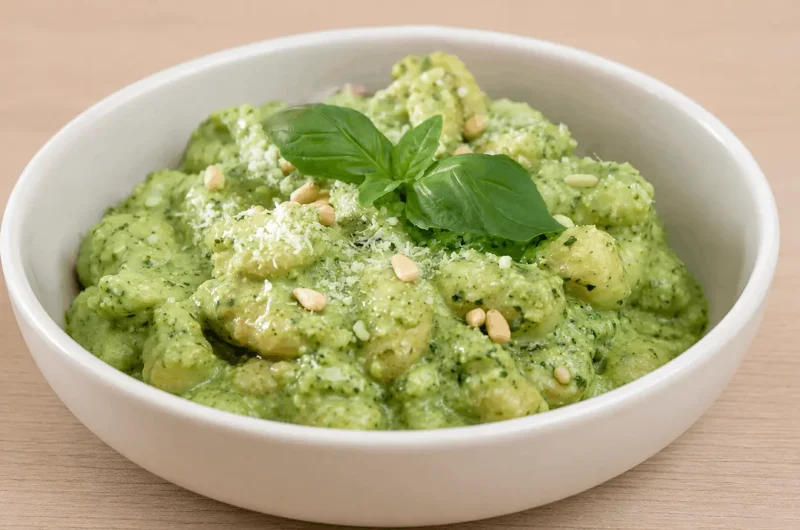
Authentic Homemade Potato Gnocchi and Fresh Basil Pesto
Course: Main CourseCuisine: ItalianDifficulty: Medium4
servings45
minutes15
minutes580
kcal1
hourSoft, pillowy homemade potato gnocchi tossed in a vibrant, freshly crushed basil and pine nut pesto. A comforting, authentic Northern Italian classic the whole family will love!
Ingredients
- Equipment Needed
Potato Ricer or Food Mill
Bench Scraper (optional)
Wooden gnocchi board or a standard kitchen fork
Mortar and pestle or a food processor
Slotted spoon or spider strainer
- Ingredients
- For the Potato Gnocchi:
1 kg (2.2 lbs) floury potatoes (red peel or Russet)
250 g (2 cups) all-purpose flour, plus extra for dusting
1 large egg
1 tsp fine sea salt
1 pinch black pepper
1 tbsp fresh parsley, finely chopped
- For the Pesto alla Genovese:
2 cups fresh basil leaves, packed
2 tbsp pine nuts, lightly toasted
1 to 2 small garlic cloves
50 g (1/2 cup) Parmigiano-Reggiano, grated (plus extra for serving)
15 g (2 tbsp) Pecorino Romano, grated
120 ml (1/2 cup) extra virgin olive oil
1 pinch coarse salt
30 ml (2 tbsp) hot starchy pasta cooking water
Directions
- Roast potatoes whole with skins on at 400°F (200°C) until fork tender. Cool completely, peel, and pass through a potato ricer onto a clean work surface.
- Form a well in the riced potatoes. Add the egg, flour, salt, pepper, and chopped parsley.
- Gently compact the mixture into a dough ball. Do not knead or overwork.
- Cut dough into sections, roll into ropes about 3/4 inch thick, and cut into small pillows. Roll each piece down a gnocchi board or fork to create ridges. Place on a well-floured tray.
- In a mortar and pestle, crush garlic, pine nuts, and coarse salt into a paste. Grind in the fresh basil leaves, then stir in the cheeses and slowly drizzle in the olive oil.
- Bring a large pot of salted water to a rolling boil. Drop in the gnocchi in batches. Once they float to the top (about 2 to 3 minutes), cook for 10 to 20 seconds more, then scoop out with a slotted spoon.
- Transfer gnocchi to a large serving bowl. Add the pesto and a splash of the hot starchy pasta cooking water. Toss gently off the heat until a creamy sauce forms.
- Garnish with extra grated Parmigiano, toasted pine nuts, and a fresh basil leaf. Serve immediately.
Notes
- The Cold Potato Rule: Always work with completely cold, roasted potatoes. Cold potatoes are drier, which means less flour, which means softer, lighter gnocchi. This single step makes the biggest difference.
- Pesto Warning: Never cook your pesto directly over stovetop heat. Heat destroys fresh basil flavor and turns the sauce brown instantly. Always toss in a bowl off the heat.
- Freezer Friendly: Freeze raw shaped gnocchi flat on a baking sheet, then transfer to a bag. Cook straight from frozen — do not thaw first.
- Sauce Variations: This recipe works just as well with a simple tomato sauce, brown butter and sage, or a gorgonzola cream sauce if you want to mix things up.