

Hi guys! Welcome to Yums Junction.
I was just swept away by this delicious potato and salmon combination. I love to cook, and I think you do too—that’s why we’re here hanging out together. Today, I’m showing you a dish that has my mouth watering just looking at it: creamy sweet potatoes mixed with russets, grilled green asparagus, and a salmon fillet topped with a glossy glaze and crunchy pistachios. It’s savory, it’s sweet, and it’s the perfect restaurant-style meal you can actually pull off at home.
Why You’ll Love This
- The “secret” potato mix: You aren’t just using sweet potatoes. You’re blending sweet potatoes and Russet (Burbank) potatoes. You get the velvetiness of a classic mash with the flavor of sweet potato.
- No “candy bar” salmon: I’ll walk you through how to buy the right cut of fish so you get a juicy, full-flavor fillet, not a thin, dry strip.
- The “Mother” rule: Chef Denise has a philosophy: “If you’re not going to serve it to your mother, don’t serve it to the guests.” This dish is absolutely mother-approved.
Shopping Tip: The Salmon Strategy
Before we get cooking, let’s talk about the fish. When you go to the fish market, don’t be shy. Ask for a center cut or a cut from closer to the head rather than the tail.
- The tail is thinner and cooks faster (good for people who like their salmon more done).
- The center cut gives you that luscious, medium-cooked texture we love.
Also, if you can, ask for a piece that includes both top and belly. The belly has that delicious fat (and fat equals flavor!), while the top is meaty. You want your piece of fish to tell the full story of flavor and texture.
What You’ll Need
Special Equipment
- Cast iron skillet (or a heavy-bottomed oven-safe pan)
- Baking sheet / sizzle plate (for asparagus)
- Fish spatula (thin metal spatula)
- Pastry brush
- Large pot (for potatoes)
The Salmon
- 4 salmon fillets (about 6 oz each, preferably center-cut, skin-on)
- 2 tbsp olive oil (divided for salmon and asparagus)
- Salt and fresh cracked black pepper (or grill seasoning: 3 parts salt to 1 part pepper)
The Two-Potato Mash
- 2 medium sweet potatoes, peeled and diced
- 1 large Russet (Burbank) potato, peeled and diced
- 2–4 tbsp unsalted butter
- ¼–½ cup heavy cream, warmed
- Salt to taste
The Roasted Asparagus
- 1 lb asparagus spears (look for tight heads, woody ends snapped off)
- 1 tbsp olive oil
- Salt and black pepper
The Maple-Honey Mustard Glaze
- 1 tbsp Creole mustard (sub whole grain mustard + dash of hot sauce if needed)
- 1 tbsp Dijon mustard
- 1 tbsp honey (or maple syrup)
- 1 tsp apple cider vinegar
- 1 tsp fresh lime juice
- Pinch of salt and pepper
The Topping
- ½ cup pistachios, shelled, toasted, and roughly chopped or crushed
Let’s Get Cooking!
1. Prep the Potatoes
Place the peeled and diced sweet potatoes and russet potato in a large pot. Cover with cold water (starting cold helps them cook evenly).
Bring to a boil, then reduce to a simmer and cook until fork-tender, about 15 minutes.
2. Steam and Mash
Drain the potatoes well. Let them sit in the colander or in the dry pot for about 5 minutes to steam off excess moisture—this helps the starch set up and keeps the mash from getting watery.
Return to the pot, add 2–4 tbsp butter and about ¼ cup warmed heavy cream. Mash until smooth and creamy, adding more cream if you like it looser. Season with salt to taste. Cover to keep warm.
3. Prep the Asparagus (Snap, Don’t Cut!)
Preheat oven to 425°F (220°C).
Crucial tip: When prepping asparagus, snap, don’t cut. Take each spear and gently bend it near the bottom—the stalk will naturally break where the tenderness starts. That way, you’re not stuck chewing woody, stringy ends.
Place the snapped spears on a baking sheet. Drizzle with about 1 tbsp olive oil and massage to coat. Season with salt and pepper and set aside.
4. Make the Glaze
In a small bowl, whisk together the Creole mustard, Dijon mustard, honey, apple cider vinegar, lime juice, and a pinch of salt and pepper.
Taste and adjust: add a touch more honey if you like it sweeter, or a splash more vinegar/lime if you like it brighter.
5. Sear the Salmon
Heat a cast iron skillet over medium-high heat. Pat the salmon fillets dry with paper towels. Rub them with a little olive oil and season generously with salt and pepper (or your grill seasoning mix).
Add a thin film of oil to the hot skillet. Place the salmon flesh-side down in the pan. Press gently so the fish makes good contact with the surface. Sear for 3–4 minutes, until you get a crisp, golden top.
6. Glaze and Roast
Flip the salmon so it is now skin-side down in the skillet. Brush the seared top generously with the mustard glaze using a pastry brush.
Place the skillet with the salmon and the baking sheet with asparagus into the oven (bottom or middle rack is fine).
7. Finish Cooking
Roast for about 8 minutes. The asparagus should turn bright green and be tender-crisp.
The salmon is done when:
- You see a little white “albumin” (white protein) starting to appear on the sides.
- The fish feels firm but still has a slight spring-back when you gently press the thickest part.
If you like using a thermometer, you can aim for about 125–130°F (medium) in the thickest part, adjusting for your preferred doneness.
8. Plate
Spoon a generous mound of the two-potato mash in the center of each plate.
Cross several asparagus spears over the mash in an “X”.
Using a fish spatula, slide between the salmon meat and the skin (leave the skin in the pan) and gently transfer the fillet on top of the asparagus.
9. Garnish
Sprinkle the toasted, crushed pistachios all over the top of the salmon, letting some fall onto the potatoes and plate. Serve immediately.
check out Valentine recipes
- Heart-Shaped Cupcakes
- Super Simple Dark Chocolate & Pistachio Bark
- Hot Honey Pizza with Homemade Roasted Tomato Sauce
If you like this recipe Explore more recipes
FAQs
Is it better to bake or pan-sear the salmon?
For this recipe, we do both! We start with a sear in a hot cast iron skillet to get that crispy, restaurant-style texture on the flesh side, then finish it in the oven. That way, you get gorgeous color, plus a moist, perfectly cooked interior.
Can I use just sweet potatoes for the mash?
You can, but I highly recommend trying the two-potato method at least once. By mixing Russet (Burbank) potatoes with sweet potatoes, you get the fluffy, velvety texture of a traditional mash with the flavor and color of sweet potato. It also helps prevent the mash from becoming too dense or gummy.
Why do you snap asparagus instead of cutting it?
Asparagus spears mature at different rates. The bottom of the stalk is often woody and fibrous, while the top is tender. Snapping allows each spear to break at its natural point of tenderness, so every bite is pleasant instead of chewy.
How do I know when the salmon is done?
Look for a little bit of white albumin seeping out and press the thickest part gently—it should feel firm but still spring back slightly, not hard as a rock. If you use a thermometer, about 125–130°F in the center is a nice medium for most people.
Can I make the glaze ahead of time?
Absolutely. You can whisk together the mustards, honey, vinegar, and lime juice a day or two ahead. Store it in the fridge and give it a good stir before brushing it onto the salmon.
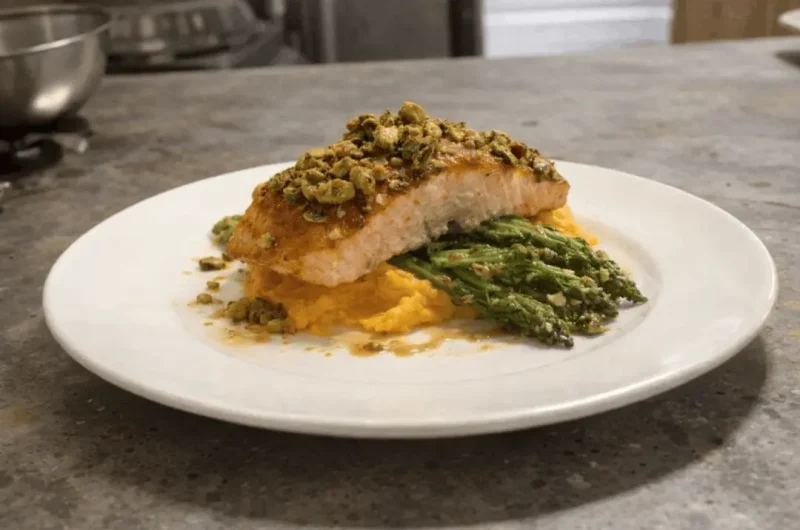
Pan-Seared Pistachio Salmon with Sweet Potato Mash
Course: MainCuisine: American, ContemporaryDifficulty: Medium4
servings20
minutes25
minutes650
kcal45
minutesA restaurant-quality dinner featuring a unique sweet-and-russet potato mash, perfectly snapped roasted asparagus, and salmon seared to perfection with a zesty honey-mustard glaze and crunchy pistachios.
Ingredients
- Equipment Needed
Cast iron skillet (or oven-safe heavy pan)
Baking sheet
Large pot (for potatoes)
Fish spatula
- Ingredients
4 salmon fillets (about 6 oz each, center cut, skin-on)
2 tbsp olive oil (divided)
1 tsp salt (plus more to taste)
½ tsp black pepper (plus more to taste)
- Two-Potato Mash
2 medium sweet potatoes, peeled and cubed
1 large Russet potato, peeled and cubed
3 tbsp unsalted butter
¼–½ cup heavy cream, warmed (start with ¼ cup, add more if needed)
Salt to taste
- Asparagus
1 lb asparagus spears, woody ends snapped off
1 tbsp olive oil
Salt and black pepper
- Glaze
1 tbsp Creole mustard (or whole grain mustard + dash of hot sauce)
1 tbsp Dijon mustard
1 tbsp honey (or maple syrup)
1 tsp apple cider vinegar
1 tsp lime juice
Pinch of salt and pepper
- Topping
½ cup pistachios, toasted and crushed
Directions
- Prep the Potatoes:
- Place peeled and diced sweet potatoes and Russet potato in a large pot. Cover with cold water. Bring to a boil, then simmer until fork-tender, about 15 minutes.
- Steam and Mash:
- Drain the potatoes and let them sit for about 5 minutes to steam off excess moisture. Return to the pot, add butter and warmed heavy cream. Mash until smooth and creamy, adding more cream if needed. Season with salt to taste. Cover to keep warm.
- Prep the Asparagus:
- Preheat oven to 425°F (220°C). Snap woody ends off the asparagus where they naturally break. Place on a baking sheet, drizzle with 1 tbsp olive oil, massage to coat, and season with salt and pepper.
- Make the Glaze:
- In a small bowl, whisk together Creole mustard, Dijon mustard, honey, apple cider vinegar, lime juice, and a pinch of salt and pepper. Taste and adjust to your liking.
- Sear the Salmon:
- Heat a cast iron skillet over medium-high heat. Pat salmon dry, rub with a little olive oil, and season generously with salt and pepper. Add a thin film of oil to the hot skillet.
- Place salmon flesh-side down, pressing gently. Sear for 3–4 minutes until the top is browned and crisp.
- Glaze and Roast:
- Flip salmon so it is skin-side down in the skillet. Brush the seared tops generously with the mustard glaze. Place the skillet with salmon and the baking sheet with asparagus into the oven.
- Finish Cooking:
- Roast for about 8 minutes, until asparagus is bright green and tender-crisp and salmon is just cooked through (slight spring-back when pressed and a little white albumin visible, or about 125–130°F internal if using a thermometer).
- Plate:
- Spoon a mound of mashed potatoes in the center of each plate. Cross asparagus spears over the mash. Using a fish spatula, slide between salmon flesh and skin, leaving the skin in the pan, and place each fillet on top of the asparagus.
- Garnish:
- Sprinkle toasted, crushed pistachios over the salmon and around the plate. Serve immediately.
Notes
- The “Candy Bar” Cut: Avoid thin, long tail pieces. Ask your fishmonger for a wide, thick center cut that includes both top and belly for the best texture and flavor.
- Skin Trick: We cook with the skin on to protect the meat, then easily leave it behind in the pan for this plating style.
- Glaze Swap: If you don’t have Creole mustard, use grainy mustard with a dash of Worcestershire and cayenne or hot sauce.
- Doneness Preference: Cooking times can vary by oven and fillet thickness. Adjust roasting time slightly if your fillets are thicker or thinner, and cook to your preferred doneness.
- Snap asparagus instead of cutting it: Snapping allows each spear to break at its natural point of tenderness, so every bite is pleasant instead of chewy.