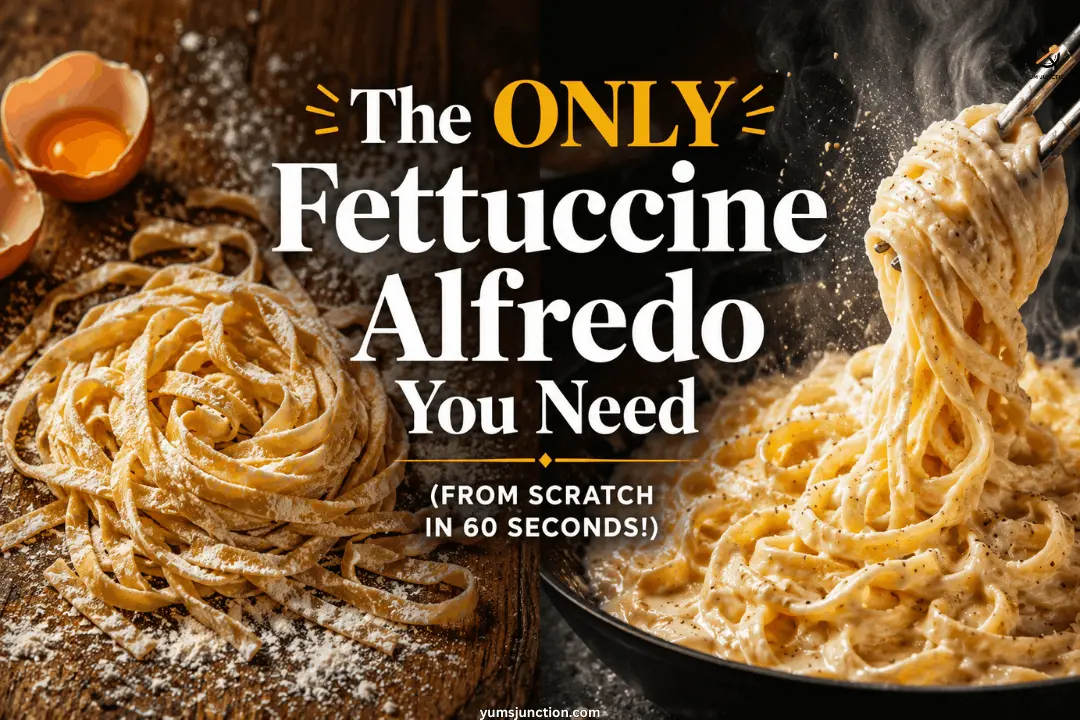
Fettuccine Alfredo is a creamy Italian pasta dish made by tossing fresh fettuccine in a simple sauce of butter, garlic, half and half, and freshly grated Parmigiano Reggiano, all emulsified with a splash of starchy pasta water into a silky, glossy coating that clings to every strand. This version goes all the way and makes the pasta from scratch using the Italian Grandma method, which sounds impressive but is easier than you think.
Fettuccine Alfredo! This is such a simple dish to make, you know? And it is packed with flavor. It is creamy, it is peppery, it is filled with all sorts of deliciousness, and honestly you can totally make it on a budget.
We are doing it the actual best way: from scratch. We are rolling out beautiful and fresh pasta dough by hand and tossing it in the easiest and creamiest garlic Parmesan sauce you will ever make.
Table of Contents
Why You Will Love This Fettuccine Alfredo Recipe
Listen, making pasta from scratch might sound intimidating, but it is one of the most rewarding things you can do in the kitchen. You will love this recipe because we are having fun with it. We are using the Italian Grandma method to mix the dough, getting our hands dirty, and skipping the heavy cream for a lighter and perfectly balanced half and half sauce that still coats every single noodle like an absolute dream. Plus, kneading the dough burns off all the calories you are about to eat! It is fresh, it cooks in literally 60 seconds, and you might just find yourself eating it straight out of the pan.
If you love making fresh Italian pasta from scratch, you are absolutely going to want to also check out our Authentic Spaghetti Carbonara with Homemade Fresh Pasta, which uses this exact same Italian Grandma dough method and takes your pasta skills to the next level.
What You Will Need
Special Equipment
- Digital kitchen scale (crucial for measuring eggs and flour)
- Bench scraper
- Pasta machine or rolling pin
- Plastic wrap
- Microplane or cheese grater
- Large skillet
For the Fresh Pasta
- 300g (approx. 2 and ¼ cups) Tipo 00 flour or all-purpose flour (plus extra flour for dusting)
- 171g eggs (usually 2 whole large eggs plus 4 additional egg yolks; add a splash of water if you are short of 171g)
- A heavy pinch of salt (for the boiling water)
For the Alfredo Sauce
- 4 tbsp (¼ cup) unsalted butter (a nice hunk)
- 1 large clove garlic, finely minced
- 1 cup half and half
- 1½ to 2 cups Parmigiano Reggiano cheese, freshly grated from a block
- Freshly cracked black pepper, to taste
- Reserved pasta water (about ¼ cup, as needed)
Let us Get Cooking
1. The Egg to Flour Ratio Vibe
Begin by making fresh pasta. The first step is to measure out all of your ingredients. For this dough recipe, use two whole eggs, and then separate out four additional yolks. Be very careful when separating yolks, because seriously, one of the most beautiful things in all of cooking is when you pour those yolks into the flour. For this recipe, you should have at least 171 grams of eggs. To match this egg weight, you will need about 300 grams of flour!
Pro tip: If that number is under 171, just add a touch of water until you get over that amount. That is it.
2. The Italian Grandma Well Method
To make pasta, start by dumping out flour in the center of a cutting board. Then, using the base of that same bowl, make what is called a well in the middle of your flour. Dump your eggs right into the center of that well. Grab a fork, puncture through all the egg yolks, and begin to whisk. Whisk very carefully! Do not break the sides of your well. Pretend the flour is a bowl and that you are whisking up your eggs to make an omelet. If you break the bowl, your eggs are going to fly everywhere. Literally.
3. Incorporate the Dough
Once your eggs are properly mixed, begin to pull in the edges of the flour, gradually incorporating it into your egg bit by bit. The egg should become thicker and thicker as you pull in that flour, and eventually you can take the leap and pull everything in all together. Grab a bench scraper and start pulling all of that flour in.
4. Time to Knead (And Burn Some Calories)
Once it looks like a pile of powdery scrambled eggs, it is time to use your hands! Get in there, accept the fact that your hands are going to get dirty, and start pressing it all together. Use your left hand to fold the dough over itself. Use the weight of your body and the palm of your hand to press the dough down and into itself. Get in a nice rhythm and do this for about 5 to 10 minutes, or until the dough is smooth and elastic. Your arms are going to get tired, seriously. But what this does is develop all the gluten, giving the pasta that nice, chewy texture.
If you press a finger in and it springs back up? You know you have worked your dough properly. Wrap it up tightly in plastic wrap, and let it take a quick nap for at least 1 hour (or up to 3 hours) at room temperature.
Food safety note: This dough contains raw eggs that are fully cooked when the pasta is boiled. If you are immunocompromised, pregnant, or serving vulnerable groups, use pasteurized eggs for the dough.
5. Rolling It Out (Let the Machine Do the Work!)
After resting, cut off a tiny bit of the dough. Hit it with a touch of flour and press it out into a nice thin strip. You can use a rolling pin, your hands, or honestly, a wine bottle! You just want a nice thin edge to feed into your pasta maker. Hit your pasta attachment with plenty of flour, then hit both sides of the dough with even more flour. On the lowest (widest) setting, start to put that pasta through. Let it do its thing! Too many people pull it and grab it, just let it roll.
Between each roll, fill the sheet with flour and lightly rub it into all those cracks. Flip it over, do the same thing. Click the dial to make it a little thinner and go again. Guide it gently. Once I can start seeing my hands through the pasta in the light, that is usually a pretty good indicator that it is thin enough!
6. Fettuccine Time
Toss your rolled dough onto your board. We are making Fettuccine Alfredo, so obviously we need fettuccine! Run it through your fettuccine attachment, or just cut the pasta by hand into nice thick noodles. Once you have a portion cut, lay it out on your board, drag it through some flour, and twirl it around into a nice little nest.
7. The Easiest and Creamiest Alfredo Sauce
The reason for making sauce first is because your fresh pasta is going to cook very fast, like 60 seconds fast! Into a pan on medium heat, add a nice hunk of butter. Once that butter is melted down, add in one minced clove of garlic and mix around until it is nice and aromatic. Do not brown it.
Add in your half and half, and stir to get it nice and warm, but do not bring it to a boil. We just need it warm enough to melt our cheese. Once it starts bubbling at the edges, turn your heat down to low.
Grab a big block of Parmigiano Reggiano and start grating directly into the warm liquid. I know the sauce is done once it gets to that perfect and glossy consistency. Just keep going and stirring continuously until the cheese melts and the fettuccine Alfredo sauce thickens up and is smooth and creamy.
8. The 60 Second Pasta Cook and Toss
Throw your fresh fettuccine nests into the boiling water. Give it a quick and gentle stir. Wait until it starts floating, give it about 15 to 20 more seconds, and then it is done. Total cook time is roughly 60 seconds!
Pull that pasta and immediately dump it right into your skillet with the Alfredo sauce, along with a tiny splash of that starchy pasta water and some fresh cracked pepper. Now, mix vigorously until the sauce coats every noodle perfectly. Give it a quick taste.
To plate, roll it up into a nice big twirl, push it ever so carefully onto your plate, and finish with one final dusting of cheese and just a light touch of fresh cracked pepper over the top. Best pasta ever.
Once you have made fresh pasta twice, it becomes second nature. Our Creamy Garlic Pasta is a great weeknight option for when you want all that creamy pasta comfort but you want to be done in 20 minutes instead of 90.
If you like this recipe Explore more recipes
FAQs
Is Fettuccine Alfredo actually Italian?
Yes, it actually originated in Rome! It was popularized in 1908 by Italian restaurateur Alfredo di Lelio, who created the dish to help his pregnant wife regain her appetite. However, the heavy cream and garlic version we are used to today is largely an American adaptation. In Italy, you will rarely find cream in Alfredo sauce!
What is Alfredo sauce made of?
Traditionally, authentic Italian Alfredo sauce is made of only three ingredients: butter, Parmigiano Reggiano cheese, and starchy pasta water. The Americanized version is usually made with heavy cream, butter, garlic, and Parmesan. For this recipe, we use half and half instead of heavy cream to keep it perfectly creamy but just a little lighter!
Can you make Alfredo sauce without heavy cream?
Absolutely! Aside from making the authentic Roman version (which uses zero cream at all), you can make a lighter cream-style sauce by substituting heavy cream with half and half, just like we do in this recipe. It melts the cheese beautifully without being overly heavy.
Why did my Alfredo sauce separate or turn clumpy?
Separation happens when your sauce gets way too hot, causing the dairy fats and the cheese to split from the liquids. To prevent this, always add your cheese over very low heat (or off the heat entirely) and stir constantly until melted. Never let your half and half come to a rolling boil! If it does separate, pull it off the heat immediately and vigorously whisk in a tablespoon of hot and starchy pasta water to bring it back together
What sides go well with Fettuccine Alfredo?
Because the sauce is rich and creamy, you want something light and fresh alongside it. A simple green salad with a bright vinaigrette, steamed broccoli, roasted asparagus, or garlic bread to mop up any extra sauce all work beautifully. For a full Italian pasta night, our Spicy Honey Garlic Butter Shrimp Pasta is a wonderful contrasting pasta dish to have on the table alongside this for a crowd.

Homemade Fettuccine Alfredo Recipe from Scratch (Half and Half, No Heavy Cream!)
Course: Main CourseCuisine: Italian, AmericanDifficulty: Medium4
servings20
minutes10
minutes680
kcal1
hour1
hour30
minutesCreamy, peppery, and seriously simple! Learn the Italian Grandma method to make perfectly chewy fresh pasta dough, tossed in a rich, buttery garlic Parmesan sauce made with half and half instead of heavy cream.
Ingredients
- Equipment Needed:
Digital kitchen scale
Bench scraper
Pasta machine
Microplane or cheese grater
Large skillet
- Ingredients:
- For the Fresh Pasta:
300g (approx. 2 and 1/4 cups) Tipo 00 or all-purpose flour, plus extra for dusting
171g eggs (approx. 2 whole large eggs plus 4 egg yolks)
Water (a tiny splash, only if eggs weigh under 171g)
Salt (for boiling water)
- For the Alfredo Sauce:
4 tbsp (56g) unsalted butter
1 clove garlic, finely minced
1 cup (240ml) half and half
1.5 to 2 cups (150g) Parmigiano Reggiano, freshly grated from the block
Freshly cracked black pepper to taste
Directions
- Pour 300g of flour onto a clean work surface and create a deep well in the center. Pour 171g of eggs into the center.
- Gently whisk the eggs with a fork without breaking the flour walls. Gradually pull in flour from the inner edges until the mixture thickens. Use a bench scraper to fold the remaining flour into the center until a shaggy dough forms.
- Knead with the palms of your hands for 5 to 10 minutes, folding and pressing firmly until the dough is smooth, elastic, and springs back when poked.
- Wrap tightly in plastic wrap and rest at room temperature for 1 to 3 hours.
- Bring a large pot of heavily salted water to a boil.
- Cut off a portion of dough, flatten it, and dust generously with flour. Run it through your pasta maker on the widest setting. Fold it, flour it, and run it through again. Continue rolling on thinner settings until you can see the shadow of your hand through the sheet.
- Pass the thin sheet through your fettuccine cutter. Toss the noodles in flour and form into nests.
- In a large skillet over medium heat, melt the butter. Add the minced garlic and saute for 1 minute until fragrant. Do not brown it.
- Add the half and half. Stir until warm and just beginning to bubble at the edges. Do not boil. Reduce heat to low.
- Gradually grate and stir in the Parmigiano Reggiano until fully melted and the sauce is creamy and thick.
- Drop the fresh fettuccine into the boiling water. Once it floats, cook for 15 to 20 seconds longer (about 60 seconds total).
- Transfer the pasta directly into the sauce skillet with a small splash of hot pasta water and fresh cracked pepper. Toss vigorously to coat. Serve immediately with extra cheese on top.
Notes
- The Golden Ratio: Weigh your eggs for the pasta dough. You need about 171g of eggs for 300g of flour. If your eggs are a little light, add a tiny splash of water to make up the difference.
- Do Not Boil the Cream: When heating your half and half, keep a close eye on it. If it boils, your cheese will clump and your sauce will separate. Low and slow is the secret to silky smooth Alfredo sauce.
- Grate Your Own Cheese: Pre-packaged shredded cheese is coated in anti-caking agents that will ruin the texture of your Alfredo sauce. Always buy a block of Parmigiano Reggiano and grate it yourself.
- Traditional vs American: This recipe uses half and half and garlic, making it a slightly lighter take on the classic Americanized Alfredo. True Roman Alfredo only uses butter, Parmesan, and pasta water!
- Food Safety: Raw eggs in the pasta dough are fully cooked during the boiling step. If serving immunocompromised individuals, use pasteurized eggs.