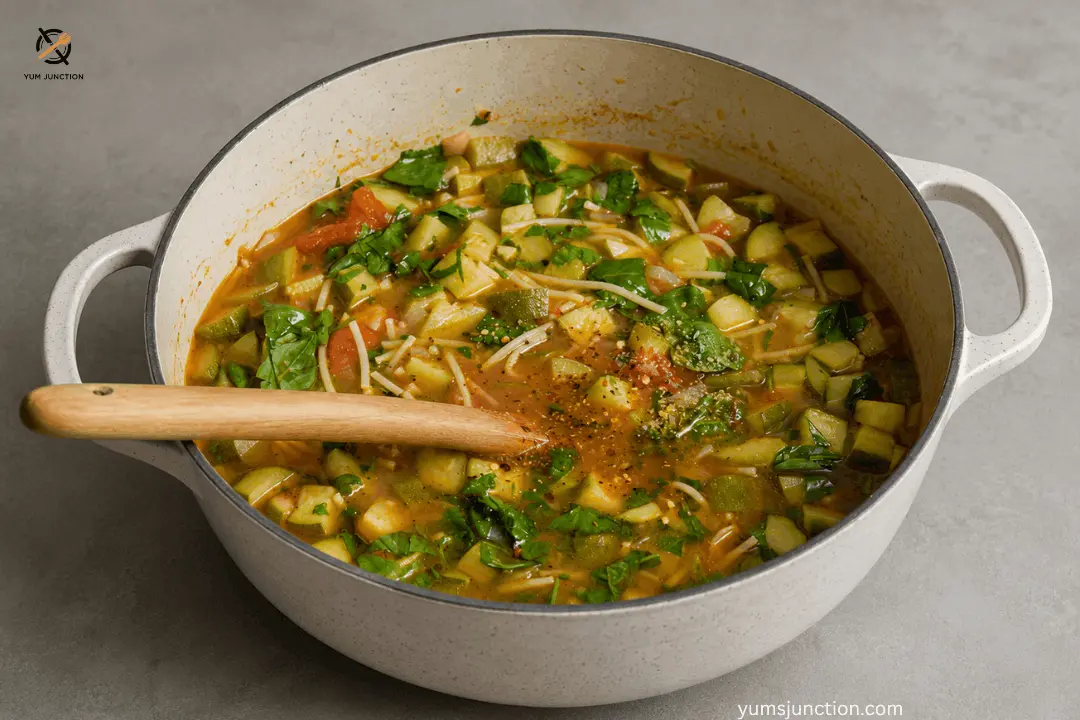
In this post, I am going to show you how to make a summer zucchini soup. This is a classic Italian dish, and it’s a great one if you have a big abundance of zucchini in the garden and you just don’t know what to do with it. It’s honestly one of my favorite summer soup ideas because it feels light and cozy at the same time.
Really quickly, this dish is an adaptation of a Sicilian soup that would traditionally be done with cucuzza. Cucuzza is a very long, tremendous squash that gets very heavy. Sometimes they go by “gagutz,” or snake squash. They’re a pale green, and they have these leaves and shoots on them called tenerumi, and you use those in the soup as well.
But for this recipe, we’re going to use a little bit more fresh herbs, and we’re going to use regular old zucchini that you can find anywhere. So if you’ve been hunting for summer zucchini recipes, this is such a good one to start with.
Table of Contents
Why You’ll Love This
- It’s a blank canvas: You can keep it light and vegetarian, or use it as a base for beans, crumbled sausage, or pancetta.
- It uses up that summer squash: If your garden is overflowing with zucchini, this soup will take down a good four or five cups of it in one go, which makes it a perfect zucchini soup recipe for late summer when you’re drowning in squash.
- It’s incredibly nourishing: There’s something about a clear, simple broth loaded with fresh vegetables and herbs that just feels good. It tastes like something straight out of a garden.
- It’s forgiving: If you cook to the gram and to the micro-measurement, you will be a boring person forever! You will be, okay? This soup doesn’t demand perfection. Add more tomatoes if you want. Throw in more herbs. Make it yours.
If you’re into light, veggie‑packed summer soup and summer zucchini recipes like this, you’ll probably also love my fresh, 15‑minute Best Mediterranean Chickpea Salad for easy lunches.
What You’ll Need
Special Equipment:
- Large Dutch oven or heavy-bottomed soup pot
- Separate large pot (for boiling pasta)
- Wooden spoon
The Ingredients:
- 5–6 tbsp Extra virgin olive oil (plus more for serving)
- 1 large Onion, diced
- 6 cloves Garlic, roughly chopped
- 1/2 tsp Hot red pepper flakes (adjust to taste)
- 6 regular Zucchini, diced into small cubes (about 4–5 cups)
- 14 oz Canned whole plum tomatoes, hand-crushed (half of a 28‑oz can)
- 6 cups Water (or vegetable/chicken stock)
- 1/2 lb Dry spaghetti
- 1 small bunch Fresh parsley, roughly chopped
- 1 small bunch Fresh basil, leaves torn
- Salt and black pepper, to taste
- Pecorino Romano cheese, freshly grated (for serving)
Let’s Get Cooking!
1. Sauté the Aromatics
Start by coating the bottom of a large Dutch oven with a lot of really good extra virgin olive oil over medium-low heat. Add the diced onions and a sprinkle of salt to release the water, and just soften them up. Cook until softened and translucent, about 6 minutes.
2. Add Garlic & Spice
Then the chopped garlic goes in, and you cook that for another 2 to 3 minutes until very fragrant. Toss in the hot red pepper flakes and let them toast in the oil for about 20 seconds.
3. Cook the Zucchini
Take your diced zucchini and add them to the pot. You can really use as much or as little as you like here! Season with a little salt and black pepper. Stir well and let cook for about 8 minutes to slightly soften the squash, stirring occasionally so nothing sticks.
4. Add Tomatoes & Liquid
The predominant flavor here is that zucchini, the garlic, and the onion mixture together. Pour in your hand-crushed plum tomatoes and cook for 2 to 3 minutes. Then, add about six cups of water, just water, that’s how my grandmother always made it! Bring the pot to a boil, then immediately lower the heat to a gentle simmer. Cover partially and let it cook until the zucchini gets to the texture you like.
5. Break the Pasta
This recipe is almost always done with broken spaghetti. Take your half-pound of dry spaghetti, and all you’re going to do is break it into little pieces.
Pro Tip: Don’t try to grab the whole pound at once, or you won’t be able to do this! Try to get the pieces as small as you can, though you don’t have to be exact. If you really don’t want to break spaghetti, you could just use any type of small pasta you like.
6. Cook the Pasta
While the soup simmers, boil your broken spaghetti in a separate pot of heavily salted water (two tablespoons of salt per gallon). Cook the broken pasta until it is about 1 minute shy of al dente. Keep it on the hard side; it should still have a bite to it! Drain, reserving a little pasta water just in case.
7. Combine & The Final Herb Blast
Add the cooked pasta into the simmering zucchini soup, and then turn off the heat entirely. Now, add the herbs. Chopped up some fresh parsley and torn basil leaves. Put in as much herb as you want! That’s what I always do. You need it here. This is that final blast of flavor that brings everything to life.
8. Aggressively Season and Serve
Taste the soup and aggressively adjust the seasoning! Add a hefty amount of salt (remember you added six cups of water, so it will need salt!), more black pepper, and extra red pepper flakes if you like it spicy.
Ladle the soup into warm bowls. Top each bowl with a heavy grating of Pecorino Romano cheese and a generous drizzle of high-quality extra virgin olive oil. Grab a heel of crusty bread, and enjoy!
If you like this recipe Explore more recipes
FAQs
Do I need to peel the zucchini for zucchini soup?
No, you definitely don’t need to peel it! The skin adds a ton of great color, fiber, and flavor to the soup. Just make sure to wash your zucchini thoroughly before dicing it up.
Can I make zucchini soup without potatoes or blending it?
Absolutely. A lot of recipes tell you to blend the soup or add potatoes to thicken it up. We don’t do that here. This is a light, clear-broth soup where the vegetables and broken spaghetti are the stars. It’s meant to feel refreshing and nourishing, not heavy.
Can I serve zucchini soup cold?
We eat this warm, but you could definitely eat it at room temperature. I wouldn’t recommend eating it ice-cold straight out of the fridge, simply because this recipe uses a good amount of extra virgin olive oil, and the oil will solidify and rise to the top when chilled. Room temperature is great, though!
Can I add other vegetables or meat to this summer zucchini soup?
Yes! Think of this soup as a total blank canvas. It’s a vegetarian dish as written (if you omit the cheese), but if you wanted to start with a little pancetta, guanciale, or crumbled sausage in the pot, that would be great. You could also toss in beans or other garden scraps.
Why does my zucchini soup taste bland?
If it tastes bland, you didn’t add enough salt at the end! Remember, zucchini is mild, and we are adding six cups of plain water to the pot. You have to aggressively re-season your soup right before serving. A hefty pinch of salt, a good drizzle of raw olive oil, and lots of Pecorino cheese will bring it all to life.
If this zucchini soup recipe hits the spot for you, definitely check out my 3 High Protein Smoothies (No Powder) for super easy, filling breakfasts.
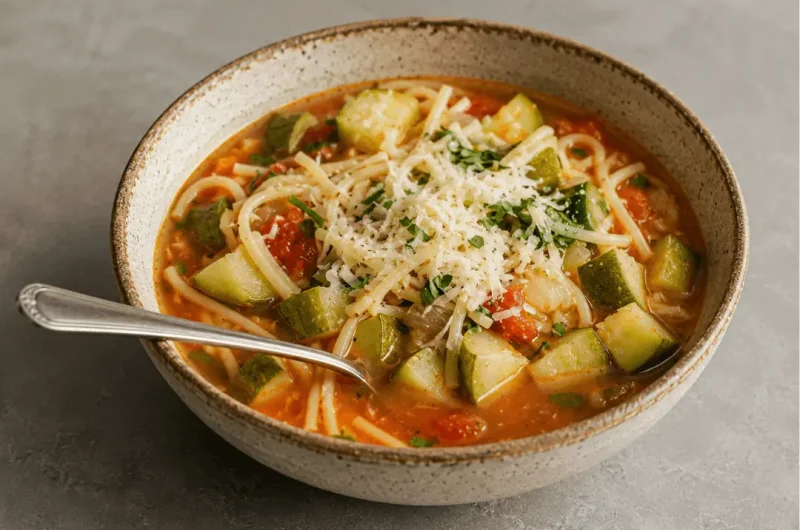
Classic Summer Zucchini Soup
Course: SoupsCuisine: ItalianDifficulty: Easy6
servings15
minutes30
minutes350
kcal45
minutesGot too much zucchini? Make this classic, comforting Italian summer soup with broken spaghetti, a light tomato broth, and a massive blast of fresh basil and parsley. It’s one of my go‑to summer zucchini recipes when the garden is overflowing.
Ingredients
5–6 tbsp extra virgin olive oil (75ml), plus more for serving
1 large onion, diced (approx. 200g)
6 cloves garlic, roughly chopped
1/2 tsp hot red pepper flakes
6 regular zucchini, diced (approx. 700g or 4–5 cups)
14 oz canned whole plum tomatoes, hand-crushed (400g)
6 cups water or stock (1.4 liters)
1/2 lb dry spaghetti, broken into small pieces (225g)
1 small bunch fresh parsley, roughly chopped
1 small bunch fresh basil, leaves torn
Salt and black pepper, to taste
Pecorino Romano cheese, for serving
Directions
- Heat a large Dutch oven over medium-low heat. Coat the bottom with olive oil. Add the diced onions and a pinch of salt, cooking until translucent (about 6 minutes).
- Stir in the chopped garlic and cook for 2–3 minutes until fragrant. Add the hot red pepper flakes for 20 seconds.
- Stir in the diced zucchini. Season with salt and black pepper, and cook for 8 minutes, stirring occasionally.
- Add the hand-crushed tomatoes and cook for 2–3 minutes.
- Pour in 6 cups of water. Bring to a boil, then lower to a gentle simmer. Cook until the zucchini is tender to your liking.
- Meanwhile, bring a separate pot of salted water to a boil. Break the spaghetti into small pieces and cook until 1 minute less than al dente. Drain well.
- Add the cooked pasta to the soup pot. Turn off the heat entirely.
- Stir in the fresh parsley and torn basil. Taste the broth and add a hefty pinch of salt, black pepper, and extra red pepper flakes if desired.
- Serve hot, topped with grated Pecorino Romano and a drizzle of raw olive oil.
Notes
- Make it Vegan: Simply omit the Pecorino cheese at the end! The broth itself is naturally vegan.
- Broth Swaps: My grandmother always used plain water to let the vegetables shine. If you want a deeper flavor, use chicken stock or homemade vegetable scrap stock.
- Add Meat: This is a blank canvas. If you want to start the pot by browning up some crumbled Italian sausage, pancetta, or guanciale before adding the onions, it will be incredible.
- Pasta Tip: Don’t cook the pasta directly in the soup unless you plan to eat the entire pot immediately. Cooking it separately prevents the pasta from soaking up all your broth and turning into mush as it sits.
- Pro-Tip: Because you are adding 6 cups of unseasoned water, you must taste and re-season heavily with salt at the end. Don’t be shy!