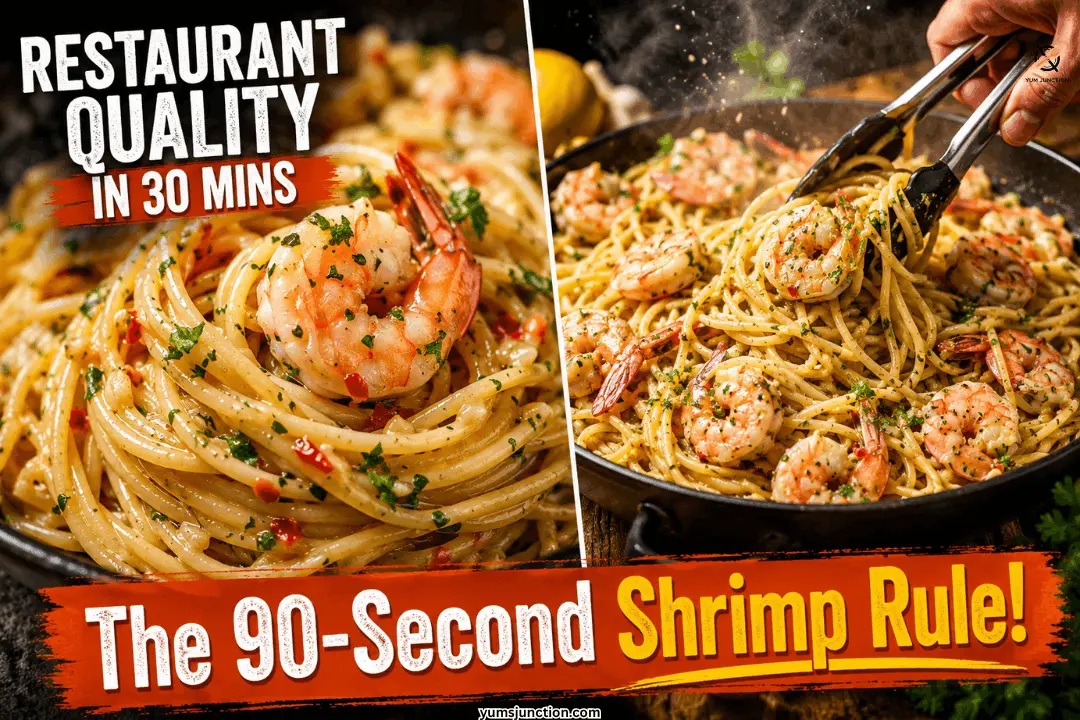
This garlic butter shrimp pasta uses fresh large shrimp, thinly sliced garlic, a Fresno pepper, a white wine reduction, and cold butter swirled into a silky emulsified sauce. It comes together in 30 minutes from prep to plate and tastes like a restaurant dish. The only rule you need to remember: shrimp cook in 90 seconds flat.
Looking for the ultimate quick dinner? Then garlic shrimp pasta is where it is at. I will tell you how to nail perfectly cooked shrimp every time, make a garlicky butter sauce so good you will want to drink it, and time it all like a pro. But do not get it twisted because quick does not mean basic. This is a dish you absolutely need to make tonight.
Table of Contents
Why You Will Love This Garlic Butter Shrimp Pasta
Listen, we all need that back pocket recipe that feels like a 40 dollar restaurant meal but comes together faster than delivery. You will love this because it relies on high impact and fresh ingredients. No soggy overcooked shrimp, and no separated sauces! The fresh Fresno pepper gives it a beautiful and bright kick, the wine reduction concentrates all that flavor, and finishing it off with monter au beurre (a fancy way of saying we are swirling in cold butter) creates a silky and luxurious sauce that clings to every single strand of pasta. Plus, it is packed with flavor and requires just a handful of ingredients.
If you are a fan of restaurant-quality pasta nights at home, you are also going to love my Marry Me Chicken Pasta, another quick and deeply satisfying weeknight dinner that hits the same notes.
What You Will Need
Special Equipment
- Shrimp peeler (optional, but incredibly helpful)
- 5 quart saucier pan or large deep skillet
- Chef tweezers or kitchen tongs
- Offset ladle (for plating)
The Ingredients for the Pasta
- 2 lbs (900g) fresh unpeeled large shrimp (16 to 20 count) (thaw overnight in the fridge or under cold running water if using frozen; never thaw on the counter)
- 1 lb (450g) dry spaghetti (or linguine or bucatini)
- 8 cloves garlic, thinly sliced
- 1 medium shallot, peeled and thinly sliced
- 1 fresh Fresno pepper, finely diced (pith and seeds removed for mild, kept for spicy)
- 1 cup (240ml) dry white wine such as Chardonnay, Sauvignon Blanc, or Pinot Grigio (sub: equal amount of chicken broth plus an extra squeeze of lemon)
- 4 tbsp (56g) unsalted butter, cold
- 3 to 4 tbsp extra virgin olive oil, divided
- 1/2 fresh lemon, juiced (plus extra zest for garnish)
- 1/4 cup fresh Italian flat leaf parsley, finely minced
- 3/4 to 1 cup Parmigiano Reggiano, finely grated (plus more for serving)
- Coarse salt and freshly cracked black pepper, to taste
For the Bonus Italian Tomato Salad (Optional Side)
- Fresh ripe tomatoes (beefsteaks, vine ripes, Romas, or cherries), sliced or halved
- 1/4 red onion, thinly sliced
- 1 clove garlic, thinly sliced
- A few fresh basil leaves, chiffonade (thinly sliced ribbons)
- 1 to 2 tbsp red wine vinegar
- 3 tbsp extra virgin olive oil
- Coarse salt, freshly cracked black pepper, and dried oregano to taste
Let us Get Cooking!
1. Let us Talk Shrimp (And No, Do Not Throw Away the Shells!)
Use 2 lbs of fresh and unpeeled 16 to 20 count shrimp, which just means 16 to 20 shrimp make up one pound. Any size shrimp will work here, and it is totally fine to use previously frozen and thawed shrimp. If using frozen, thaw them overnight in the fridge or under cold running water in a colander. Never thaw on the counter.
To devein these bad boys, use a handy shrimp peeler. Just press the tip into the upper part of the shrimp and pull up to remove the sand vein (intestinal tract) and break the shell. Then, pinch the legs and pull the shell around, exposing all the meat. You can remove the tail, but I personally like the way it looks. And yeah, the vein you see on the bottom of the shrimp is just a nerve bundle that has zero flavor, so there is no need to remove it.
Now, do not throw away the shells! Save them to make a killer shrimp bisque later. It is money. Give your peeled and deveined shrimp a quick rinse in a colander under cold water to ensure that top vein is completely gone. It tastes muddy, so rinse it off. Spread them out on paper towels and pat them completely dry so they sear instead of steam in the pan. Set them aside on a plate.
2. The Quick Prep
We need to do some really quick prep before the heat turns on. Thinly slice up the 8 cloves of garlic. Take one peeled shallot and slice it just like the garlic. Roll up some fresh Italian flat leaf parsley and finely mince it. You want about 1/4 cup.
Crushed red pepper flakes are common, but let us swap that for a fresh Fresno pepper. It is more flavorful and looks way better. Remove the pith and seeds, then very small dice it. If you want more heat, keep the pith and some seeds. Up to you!
3. The Great Pasta Debate
Bring a large pot of heavily salted water to a boil. You have options here like bucatini, linguine, or even fresh pasta if you have the time, which is amazing for absorbing sauces. But for this, go with the traditional route with dry spaghetti. Because it is dry, you can drop it in the boiling water first, and by the time it is perfectly al dente (about 8 minutes), our sauce and shrimp will be done. Talk about perfect timing. Drop in the spaghetti and start your timer!
4. Saute the Shrimp (The 90 Second Rule!)
In a 5 quart saucier pan or large deep skillet over medium heat, add enough olive oil to coat the bottom. Let it heat up for 60 seconds. Add the dry shrimp in a single layer, season with salt and pepper, and cook for a max of 90 seconds. That is it.
After 30 seconds, begin sauteing to ensure they cook evenly. A little sear on them is totally cool. You will know they are done when they are pink, opaque, and form a loose C shape. Shrimp are fully cooked when they hit 120°F internally, but the loose C shape is your visual cue. If it is a tight C shape or an O shape, it is too late and they are overcooked. Remove them to a plate immediately, but leave all that delicious oil and rendered shrimp juice in the pan.
5. A Sauce So Good You Will Want to Drink It
Add another 1 to 2 tablespoons of olive oil to that same pan over medium heat. Toss in your sliced garlic, shallots, and Fresno pepper with a pinch of coarse salt. Steam saute for 60 to 90 seconds so those leftover shrimp flavors infuse into the aromatics.
Squeeze in the juice of half a lemon to curb the Fresno heat, then pour in about 1 cup of dry white wine. Reduce it down for 2 to 3 minutes until you have about 1/2 to 3/4 cup of liquid left. The smells in your kitchen right now are going to make you famous.
6. Build the Sauce
Scoop 2 to 3 ladles of hot and starchy pasta water straight from the boiling pasta pot into your saute pan. Season with salt and cracked pepper, and let those flavors concentrate for a minute. Then drop the heat to low. Add the 4 tablespoons of cold unsalted butter. Swirl the pan constantly until the butter melts and emulsifies into a rich, glossy sauce. This is the move that makes the sauce unbelievably rich.
7. Bring on the Pasta (And the Great Cheese Debate)
Strain your perfect spaghetti and drop it right into the pan. Now, I completely understand that mixing cheese with seafood is sacrilegious in Italian cuisine, but come on now. You know Parmigiano Reggiano is just going to make this that much better, so add it! Sprinkle in 3/4 to 1 cup of finely grated Parmigiano, and using tongs or your chef bro tweezers, mix aggressively to emulsify the cheese into the pasta and liquid sauce. If you absolutely refuse to use cheese, hit it with 1/2 cup of heavy whipping cream instead for a creamy garlic shrimp pasta version.
8. Bring it Together and Serve
Fold the cooked shrimp along with all their resting juices back into the pasta. Fold in most of the minced parsley, and give it one last taste for seasoning. Twirl a large nest of pasta onto a plate, top with plenty of shrimp and extra sauce. Garnish with lemon zest, more Parmigiano Reggiano, and a final punch of green parsley. This is the dang perfect meal.
What to Serve With This
This lemon garlic shrimp pasta is rich and satisfying on its own, but if you want to round out the table:
- The Bonus Italian Tomato Salad below is the perfect bright and acidic contrast.
- My Easy Homemade Garlic Bread is the obvious choice for soaking up every last drop of that butter sauce. You will want it.
Bonus Italian Tomato Salad
If you want a fresh side, fan out the tomatoes on a platter. Top with sliced red onion and garlic. Sprinkle with basil ribbons, red wine vinegar, olive oil, salt, pepper, and dried oregano. Serve immediately alongside the pasta!
Love a seafood dinner that feels this special without a ton of effort? My Creamy Tuscan Salmon is another weeknight showstopper that comes together just as quickly and always gets the same reaction at the table.
How to Store Garlic Shrimp Pasta
- Refrigerator: Store leftovers in an airtight container for up to 3 days.
- Reheat: Gently on the stovetop with a small splash of water, chicken broth, or a little olive oil to bring the sauce back to life. Do not microwave it unless you want rubber shrimp.
- Freezer: Do not do it! Freezing cooked pasta turns it into absolute mush when you thaw it out, and the shrimp will get a weird spongy texture.
If you like this recipe Explore more recipes
FAQs
How do I know when the shrimp are fully cooked?
Shrimp cook ridiculously fast, we are talking 90 seconds total in a hot pan. You will know they are perfectly cooked when they turn pink, opaque, and form a loose C shape. The internal temperature at this point is around 120°F. If they curl tightly into an O shape, it is too late. They are overcooked and rubbery. Get them out of the pan the second they hit that loose C shape!
Can I use precooked shrimp instead of raw?
Technically yes, but I highly recommend raw shrimp. Raw shrimp absorbs all that garlicky and buttery goodness way better. If you must use precooked shrimp, thaw them out and only toss them in during the very last minute when you are folding the pasta together, just to warm them up. Searing precooked shrimp will completely ruin the texture.
What is the best pasta to use for garlic shrimp pasta?
Long and thin noodles are the undisputed kings here because they coat beautifully in that light and glossy butter sauce. I like dry spaghetti because the timing works out perfectly while making the sauce, but linguine, bucatini, or even fresh pasta are absolute money.
What if I do not want to use white wine?
No sweat. While dry white wine like Pinot Grigio or Sauvignon Blanc adds a classic and deep flavor to the reduction, you can easily swap it out for an equal amount of chicken broth. Just make sure to add an extra squeeze of fresh lemon juice at the end to make up for the bright acidity the wine usually brings to the party.
Can I freeze leftover garlic shrimp pasta?
Do not do it! Freezing cooked pasta turns it into absolute mush when you thaw it out, and the shrimp will get a weird and spongy texture. Store any leftovers in an airtight container in the fridge for up to 3 days, and reheat gently on the stovetop with a little splash of water or broth to bring the sauce back to life.
Can I make this a creamy garlic shrimp pasta?
Yes! Skip the Parmigiano Reggiano and stir in 1/2 cup of heavy whipping cream at step 6 instead. Add it after the butter emulsifies and let it simmer for about 60 seconds before adding the pasta. You get a rich, velvety creamy garlic shrimp pasta sauce that is just as good.

The Ultimate Quick Garlic Butter Shrimp Pasta
Course: DinnerCuisine: Italian, AmericanDifficulty: Easy4-6
servings15
minutes15
minutes620
kcal30
minutesA restaurant-quality garlic butter shrimp pasta made with fresh Fresno peppers, a white wine reduction, and perfectly seared shrimp. Ready in under 30 minutes and so good you will want to drink the sauce.
Ingredients
- Equipment Needed:
Shrimp peeler (optional)
5 quart saucier pan or large deep skillet
Chef tweezers or tongs
Offset ladle
- Ingredients:
900g (2 lbs) fresh large shrimp (16 to 20 count), peeled and deveined (thaw overnight in fridge or under cold running water if frozen)
450g (1 lb) dry spaghetti
8 cloves garlic, thinly sliced
1 medium shallot, thinly sliced
1 fresh Fresno pepper, finely diced
240ml (1 cup) dry white wine such as Pinot Grigio or Sauvignon Blanc (sub: equal amount of chicken broth plus extra lemon juice)
56g (4 tbsp) cold unsalted butter
45ml (3 tbsp) extra virgin olive oil, divided
Juice and zest of 1/2 fresh lemon
15g (1/4 cup) fresh flat-leaf parsley, finely minced
90g (3/4 to 1 cup) Parmigiano Reggiano, finely grated (sub: 1/2 cup heavy whipping cream for a creamy version)
Coarse salt and freshly cracked black pepper, to taste
Directions
- Peel and devein the shrimp. Rinse under cold water and pat completely dry with paper towels. If using frozen shrimp, thaw overnight in the fridge or under cold running water, never on the counter.
- Bring a large pot of heavily salted water to a boil. Add the spaghetti and cook until al dente, about 8 minutes.
- Heat 2 tbsp olive oil in the saucier pan over medium heat. Add shrimp in a single layer, season with salt and pepper, and sear for a maximum of 90 seconds until they turn pink and opaque and form a loose C shape (internal temp 120°F). Transfer to a plate, leaving the oil in the pan.
- Add 1 tbsp olive oil to the same pan. Saute garlic, shallot, and Fresno pepper for 60 to 90 seconds until fragrant.
- Squeeze in lemon juice and pour in the white wine. Simmer and reduce for 2 to 3 minutes until about half the liquid remains.
- Add 2 to 3 ladles of hot starchy pasta water to the pan. Drop the heat to low, add the cold butter, and swirl until fully melted and emulsified into a glossy sauce.
- Transfer the drained pasta into the sauce. Add the Parmigiano Reggiano and toss vigorously with tongs to coat every strand.
- Fold the shrimp, their resting juices, and most of the parsley into the pasta. Taste and adjust seasoning. Plate with lemon zest, extra cheese, and a punch of fresh parsley.
Notes
- The Loose C Shape Rule: Perfectly cooked shrimp form a loose C and reach about 120°F internally. If they curl into a tight O, they are overcooked and rubbery. Pull them immediately.
- The Cheese Debate: Yes, cheese on seafood breaks traditional Italian rules. It tastes incredible here anyway. If you are strictly against it, stir in 1/2 cup of heavy whipping cream at step 6 instead.
- No Wine Version: Swap the white wine for an equal amount of chicken broth and add an extra squeeze of lemon at the end for brightness.
- Safe Thawing: Always thaw frozen shrimp overnight in the fridge or under cold running water in a colander. Never thaw at room temperature.
- Storage: Airtight container in the fridge for up to 3 days. Reheat gently on the stovetop with a splash of water or broth. Do not freeze.
- Nutrition: Calories are estimated and will vary based on pasta portion, cheese quantity, and olive oil amount.