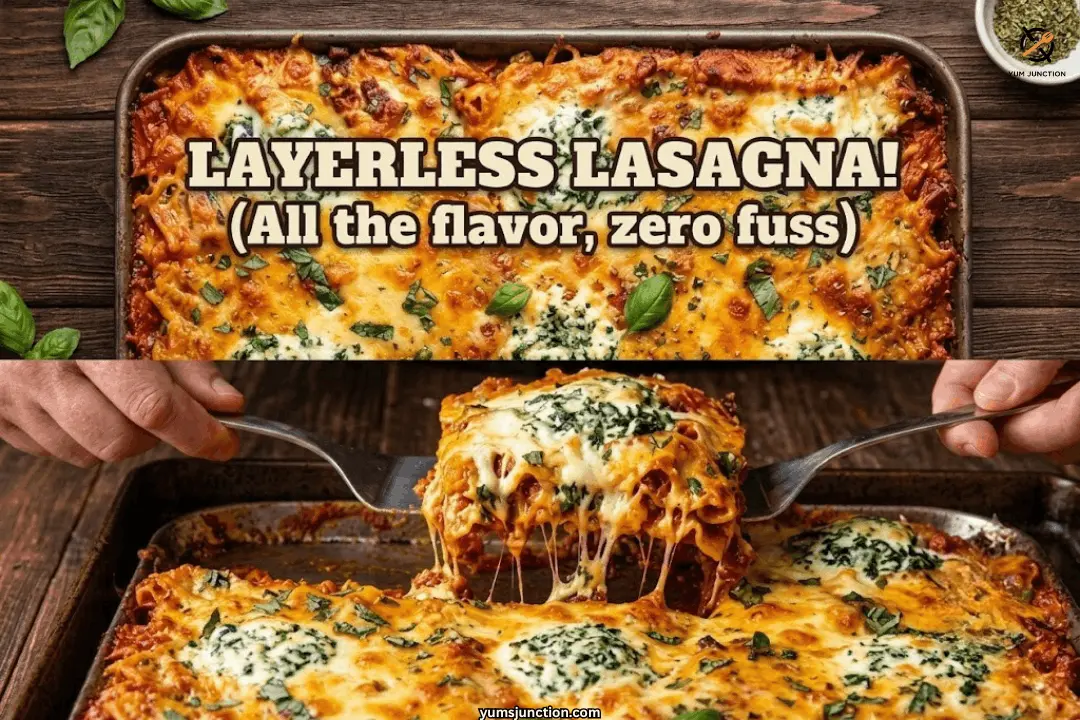
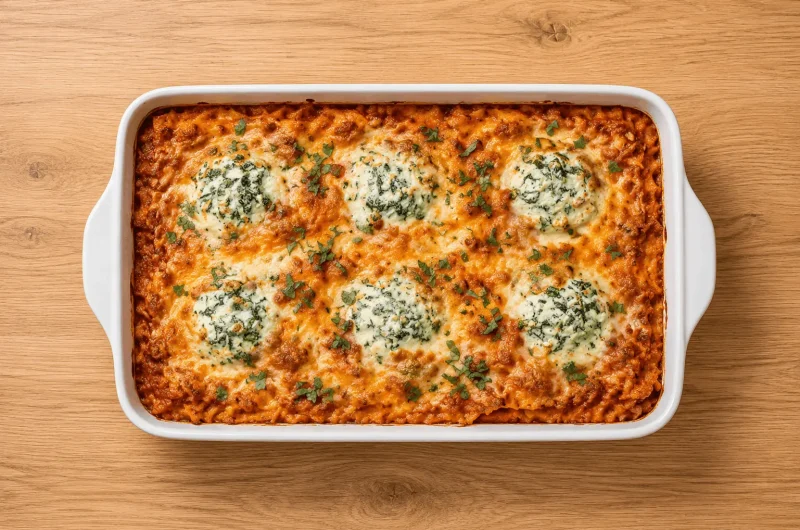
This sheet pan lasagna skips the tedious layering entirely. Broken lasagna noodles get tossed right into a sausage and marinara sauce, spread flat on a sheet pan, topped with a spinach ricotta mixture and plenty of cheese, then baked uncovered until the edges get crispy and caramelized. It comes together in about 50 minutes and gives you every bit of classic lasagna flavor with none of the fuss.
This is a recipe for original sheet pan lasagna but with some changes of my own. But honestly? I think my tweaks are really good, and you are seriously going to love them!
If you love lasagna but have not made it in a long time because of all the tedious layering, this is for you. This is what I call a mono lasagna. It is just a single, glorious, and rustic layer baked right on a sheet pan.
Table of Contents
Why You Will Love This Sheet Pan Lasagna
- No Stressful Layering: You do not have to fuss with all those sheets, getting them just right, and then having them fall apart. You literally just toss everything together.
- The Crusty Edges: Because it is spread out on a sheet pan instead of deep in a casserole dish, you get the absolute best crispy and caramelized edges everywhere.
- It is Totally Rustic: It does not have to look perfect. You literally break the noodles, dollop the cheese, and let the oven do the work. It is beautiful in its own messy way!
If you love a comforting, cheesy Italian-inspired dinner like this one, you are also going to want to try my Marry Me Chicken Pasta, another rich and crowd-pleasing pasta dinner that gets rave reviews every time.
What You Will Need
Special Equipment
- Standard rimmed half sheet pan (13 by 18 inches)
- Large pot (for boiling pasta)
- Large skillet or saute pan (for the sauce)
- Cheese grater (do not use preshredded cheese!)
- Colander
The Pasta
- 1 lb regular lasagna noodles, broken into rough 2 inch pieces
- Reserved pasta water, as needed
The Meat and Sauce
- 2 tbsp olive oil, divided
- 3 to 4 cloves garlic, minced
- 1/2 tsp red pepper flakes, adjust to taste
- 1 lb Italian sausage, casings removed
- 1 medium red onion, chopped
- 32 to 40 oz marinara sauce, your favorite brand
- 1 tsp Italian seasoning
The Ricotta Mixture
- 5 oz fresh spinach, chopped
- 1 cup whole milk ricotta cheese
- Pinch of kosher salt and black pepper
The Cheeses (Shred Your Own!)
- 1 1/2 cups Parmesan Reggiano cheese, freshly grated, divided
- 2 1/2 cups low moisture mozzarella cheese, freshly shredded, divided
- Fresh basil, chopped, for garnish
Let us Get Cooking!
1. Preheat and Prep
Preheat your oven to 400°F (204°C). Spray a large and rimmed sheet pan with cooking spray and set aside. Bring a large pot of salted water to a boil.
2. The Spinach and Ricotta Prep
Our first step is getting your greens ready. Put 1 tablespoon of olive oil in a skillet over medium heat, and toss in your minced garlic and red pepper flakes. Use literally as much or as little as you want. Let that cook for just 1 minute until fragrant.
Next, add in your chopped spinach. Lower the temperature just a little bit, add a pinch of salt and pepper, and cook it just until it wilts. Once that is done, put the spinach right into a mixing bowl and add your ricotta cheese. Mix it all up and set it aside!
3. The Sausage and Sauce
For the meat, use Italian sausage taken out of its casing. In a large skillet, heat the remaining 1 tablespoon of olive oil. Get that cooking in the pan along with a chopped red onion. I am using purple, but whatever your favorite onion is works perfectly! Cook until the meat is browned and reaches an internal temperature of 160°F, breaking it apart with a spoon as it cooks.
4. Simmer the Sauce
Once the meat is fully cooked, pour in your favorite marinara sauce and add your Italian seasoning. Again, measure with your heart. Add as much or as little as you want. Stir and let that sauce simmer gently while you handle the pasta.
5. Boil the Noodles (Broken!)
Have your pasta water boiling and add your broken lasagna noodles. Yes, broken! You just snap them into rough 2 inch pieces before tossing them in. They only need to cook for about 4 to 5 minutes so they are very al dente. Remember, they do not need to cook all the way because they will finish in the oven. Reserve a little pasta water just in case, then drain the noodles in a colander.
6. Toss Carefully
Add those beautiful and al dente noodles directly to your simmering meat sauce. Stir everything around very carefully to get the noodles completely coated in the sauce before you add the cheeses. Toss in half of your shredded mozzarella and half of your grated Parmesan Reggiano to get that melty goodness mixed right in.
7. Assemble the Pan (The Rustic Way)
Pour your coated noodles and sauce right into your prepared sheet pan. This is your base layer, so spread it all around into a single and even layer.
8. Dollop and Top (My Ultimate Cheese Tip!)
Take that spinach and ricotta mixture and just dollop it right on top. Spread your remaining Parmesan and mozzarella all over the pan.
Let me tell you my ultimate cheese tip! Whenever possible, shred the cheese yourself! The results are seriously so much better. They actually put wood pulp in prepackaged shredded cheese so that it does not stick together. Honestly! It totally affects the way it melts and the way it tastes. Plus, if you shred it yourself, you actually save money.
9. Bake and Garnish
Pop it in a 400°F oven for about 20 to 25 minutes. You want to bake it uncovered until it is bubbly and perfect, and the cheese is melted with the edges beautifully crusty and brown. When the lasagna comes out of the oven, let it rest for a few minutes. Top it with some fresh basil from the garden before serving, and enjoy!
What to Serve With Sheet Pan Lasagna
- My Easy Homemade Garlic Bread is the single most natural pairing here. You need something to mop up every bit of that sauce.
- A simple Caesar or arugula salad with a bright vinaigrette cuts through the richness beautifully.
- Roasted vegetables like broccoli or zucchini round out the meal without much extra effort.
How to Store, Reheat, and Freeze Sheet Pan Lasagna
- Refrigerator: Store leftovers in an airtight container for up to 4 days.
- Reheat: Warm in a 350°F oven, covered loosely with foil, until heated through, or microwave individual portions.
- Freezer (before baking): Assemble the lasagna on the sheet pan, wrap tightly in plastic wrap and foil, and freeze unbaked for up to 2 months. Thaw overnight in the fridge before baking as directed, adding a few extra minutes if it is still cold in the center.
- Freezer (after baking): Fully baked and cooled portions also freeze well in an airtight container for up to 2 months. Reheat from frozen in a 350°F oven, covered, until hot throughout.
If you like this recipe Explore more recipes
FAQs
Do I have to boil the noodles for sheet pan lasagna?
For this recipe, yes, but just barely! We partially boil standard lasagna noodles for just 4 to 5 minutes so they are pliable but still firm. They will finish cooking right on the sheet pan. If you try to use no-boil noodles for this, they will absorb way too much liquid and leave your pan super dry.
Do I break the lasagna noodles before or after boiling them?
Always break them before boiling! Trying to cut or tear hot, slippery, and cooked lasagna sheets is incredibly messy. Just snap the dry sheets into rough 2 inch pieces and drop them into the boiling water. It is so much easier.
How do you prevent sheet pan lasagna from drying out?
The secret is making sure every single noodle is completely coated in sauce before spreading the mix onto your pan. Because a sheet pan is shallow, moisture evaporates fast. Do not leave any bare pasta edges sticking out without sauce or cheese on them!
Can I use ground beef instead of Italian sausage?
You totally can. Ground beef or ground turkey works perfectly, cooked to the same 160°F internal temperature. But honestly? I highly recommend the Italian sausage. Because it is already packed with seasonings, it gives your quick marinara sauce this deep and cooked-all-day flavor without the wait.
What is a good substitute for ricotta cheese?
If you are not a fan of ricotta, you can absolutely swap it for cottage cheese (which melts a bit smoother) or even dollops of cream cheese. Or, if you want a really fresh summer vibe, skip the white cheese entirely and just use dollops of pesto!
Can I make this vegetarian?
Yes! Skip the Italian sausage entirely and either leave the sauce meat-free, or bulk it up with sauteed mushrooms, lentils, or a plant-based ground meat substitute. Everything else in the recipe, the noodles, sauce, spinach ricotta layer, and cheeses, is already vegetarian as written. It is an easy swap that keeps all the same rustic, crispy-edge appeal.
The Ultimate Rustic Sheet Pan Lasagna
Course: Main CourseCuisine: Italian, AmericanDifficulty: Easy8
servings20
minutes30
minutes580
kcal50
minutesAll the incredible flavor of traditional lasagna with zero stressful layering! This mono-lasagna is tossed together and baked on a sheet pan for the ultimate crispy, crusty, cheesy edges.
Ingredients
- Equipment Needed:
Rimmed half-sheet pan
Large pot
Large skillet
Cheese grater
- Ingredients:
454g (1 lb) regular lasagna noodles, broken into pieces
30ml (2 tbsp) olive oil, divided
3 to 4 cloves garlic, minced
1g (1/2 tsp) red pepper flakes
142g (5 oz) fresh spinach, chopped
240g (1 cup) whole-milk ricotta cheese
454g (1 lb) Italian sausage, casings removed
1 medium red onion, chopped
900 to 1134g (32 to 40 oz) marinara sauce
2g (1 tsp) Italian seasoning
280g (2 1/2 cups) low-moisture mozzarella cheese, freshly shredded, divided
135g (1 1/2 cups) Parmesan Reggiano cheese, freshly grated, divided
Fresh basil, chopped, for garnish
Cooking spray, for the pan
Directions
- Preheat oven to 400°F (204°C). Lightly grease a rimmed half-sheet pan with cooking spray. Bring a large pot of salted water to a boil.
- Heat 1 tbsp olive oil in a skillet over medium heat. Add garlic and red pepper flakes; cook for 1 minute. Add chopped spinach, salt, and pepper. Cook until wilted. Transfer to a bowl, mix with ricotta cheese, and set aside.
- In a large skillet, heat the remaining 1 tbsp olive oil. Add the Italian sausage and chopped red onion. Cook until browned and the sausage reaches an internal temperature of 160°F, breaking the meat apart as it cooks.
- Stir in the marinara sauce and Italian seasoning. Let simmer over low heat.
- Add the broken lasagna noodles to the boiling water. Boil for only 4 to 5 minutes; they should be very al dente. Drain the noodles.
- Add the drained noodles to the meat sauce, stirring carefully to fully coat them. Stir in half of the mozzarella and half of the Parmesan cheese.
- Pour the coated noodle mixture onto the prepared sheet pan, spreading it into a flat, even layer.
- Dollop the spinach-ricotta mixture all over the pasta. Top evenly with the remaining mozzarella and Parmesan cheeses.
- Bake uncovered for 20 to 25 minutes until the cheese is melted and the edges are crispy and golden brown.
- Garnish with fresh chopped basil before serving.
Notes
- Noodle Breaking Tip: Always break the dry lasagna sheets before boiling them. Trying to cut them after they are wet and hot is a slippery mess.
- Do Not Let it Dry Out: Ensure every noodle is coated in sauce before it goes onto the pan. Exposed, dry noodles will turn hard in the oven.
- The Cheese Rule: Shred your own cheese from a block. Pre-packaged shredded cheese contains anti-caking agents that prevent it from melting smoothly.
- Noodle Breaking Tip: Always break the dry lasagna sheets before boiling them. Trying to cut them after they are wet and hot is a slippery mess.
- Meat Safety: Cook Italian sausage or ground beef substitute to an internal temperature of 160°F, checked with an instant-read thermometer if you are unsure.
- Storage: Fridge up to 4 days. Freeze unbaked (wrapped tightly) or baked and cooled portions for up to 2 months.
- Nutrition: Calories are estimated and will vary based on sausage fat content and cheese amount.