

In this post, I’m going to share with you just how easy it is to make your own Fermented Cabbage (sauerkraut).
Why You’ll Love This
This isn’t about fancy gadgets or complicated chemistry; it’s about reconnecting with your food. You’ll love this process because It’s accessible, it’s flexible, and it empowers you to make something delicious and probiotic-rich right on your kitchen counter. It turns a simple cabbage into something transformative with zero intimidation factor.
things we need
Special Equipment/Instruments:
- Quart-sized Mason Jar: Wide mouth is easier to pack.
- Large Mixing Bowl: For massaging the vegetables.
- Box Grater or Knife: For shredding carrots and cabbage.
Ingredients:
- Cabbage: ½ head (approx. 1 kg / 2.2 lbs), green or white. Reserve one stiff outer leaf for the “spring” method.
- Carrots: 1–2 medium carrots, grated.
- Onion: ½ medium onion, chopped or sliced thin.
- Salt: 1.5 tablespoons sea salt (start with less and salt to taste). Note: The general ratio is about 2% salt by weight, roughly 20g per 1kg of vegetables.
- Caraway Seeds: 1 teaspoon (optional, for that classic flavor).
What Even Is Fermentation?
We all eat and drink products of fermentation every single day, whether we realize it or not. Simply put, fermentation is the transformative action of microorganisms. It’s how humans have long made effective use of the food resources available to them.
Think about it: bread is fermented. Cheese is fermented. Even many of our favorite condiments rely on fermentation or use vinegar, which is itself a product of fermentation. All the plant and animal foods we eat are populated by complex communities of microorganisms.
Let’s Get Chopping (and Salting)
To start, you just need a bowl and half a head of cabbage. To make things interesting grate some carrots and chop up half an onion to throw in there, too.
Then comes the salt. People often ask for exact measurements, Salt to taste, then add a small sprinkle of caraway seeds if you enjoy their flavor.
Once everything is in the bowl, mix it. Now, give it a massage. If you squeeze the mixture for a couple of minutes, you’ll find that a handful of cabbage will feel like a wet sponge. That’s what we call “sauerkraut juice,” but it’s really just the juice of the vegetables themselves. These vegetables are going to ferment under their own juices.
Give it a taste. If it needs more salt, add it now.
Getting It All in the Jar
We’re using a quart-sized jar. Here are two rules for packing:
- Leave some head room: Never fill the jar all the way to the top. Once the fermentation comes to life, it’s going to produce carbon dioxide, and everything is going to want to push upward.
- Pack it tight: Pack it tight: Press the vegetables down firmly. You should see the juice rise to the top and cover the solids—that’s exactly what you want.
The “Spring” Trick: We want to weigh the cabbage down so it stays under the brine. Save one of the outer leaves of the cabbage that has a heavy, stiff spine. Use that spine like a spring, wedging it under the neck of the jar to hold the shredded vegetables down.
Now, We Wait
Put the lid on the jar loosely. Don’t seal it tight, or the gas pressure will build up. Write today’s date on the jar and leave it on the counter at room temperature
Try to be patient. Give it three or four days, and then just start tasting it.
The acids accumulate over time. If you like a strong, assertive, acidic flavor, let it ferment for a longer time. If you prefer a milder flavor with less acidity, pull it earlier.
Don’t be intimidated by fermentation. It’s easy, it’s safe, and it’s delicious. Give it a try!
Checkout more recipes
- Mochi Ice Cream at Home (Step by Step)
- Easy Chicken Teriyaki Rice Bowls
- High-Protein Greek Yogurt Breakfast Parfaits
If you like this recipe Explore more recipes
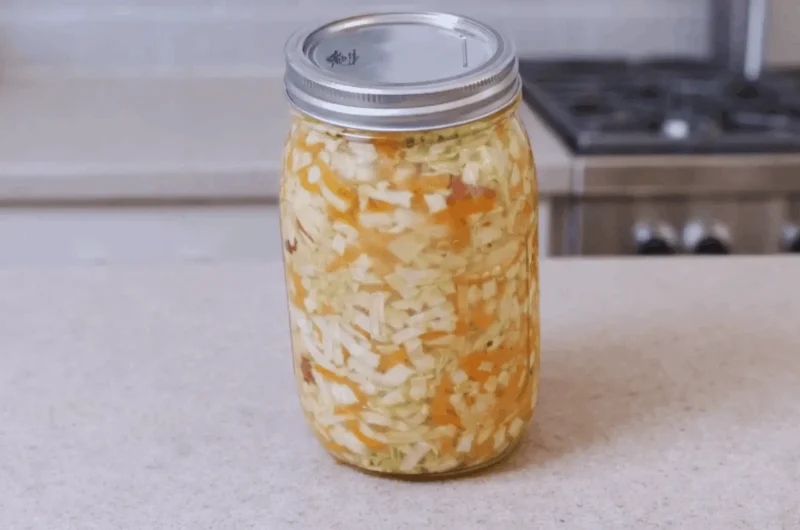
Easy Fermented Cabbage (sauerkraut)
Course: CondimentCuisine: Fermented / German-styleDifficulty: Easy16
servings20
minutes15
kcal4
Days Minimum4
DaysA simple, authentic sauerkraut recipe. Crunchy, probiotic-rich, and incredibly easy to make at home using just a few vegetables and salt.
Ingredients
- Equipment Needed:
Quart-sized glass jar
Large mixing bowl
Knife or grater
- Ingredients:
1 kg (approx. ½ head) Cabbage (green or white)
2 medium Carrots, grated
½ medium Onion, chopped
1.5 tbsp Sea salt (approx. 20g, or salt to taste)
1 tsp Caraway seeds
Directions
- Chop and Grate: Remove a thick outer leaf from the cabbage and save it for later. Shred the remaining cabbage, grate the carrots, and chop the onion. Place everything in a large bowl.
- Season: Add the salt and caraway seeds.
- Massage: Squeeze and massage the vegetables vigorously with your hands for about 5 to 10 minutes. The volume will reduce, and liquid will be released. The texture should feel like a wet sponge.
- Taste: Taste the mixture. It should be salty but edible. Adjust if necessary.
- Pack: Stuff the vegetables into the quart jar. Press down hard to eliminate air pockets. Ensure the liquid rises above the vegetables. Leave 1-2 inches of space at the top of the jar.
- Weigh Down: Fold the reserved cabbage leaf and press it on top of the shredded vegetables, using the stiff spine to wedge it under the jar’s neck. This keeps the kraut submerged in brine.
- Ferment: Screw the lid on loosely to allow gas to escape. Store at room temperature out of direct sunlight.
- Monitor: Check after 3-4 days. Taste daily until it reaches your desired acidity.
- Store: Tighten the lid and refrigerate. It will keep for months
Notes
- The “Wet Sponge” Test: If you squeeze a handful of the mixture and liquid drips out easily, it’s ready to pack.
- Carbon Dioxide: Fermentation creates gas. If you screw the lid on tight during the first few days, the jar could crack. Keep it loose or “burp” it daily.
- Flavor Profile: A shorter fermentation yields a milder, crunchy kraut. Longer fermentation (2+ weeks) yields a softer, more assertive and acidic flavor.
- Storage: Once in the fridge, the fermentation slows down significantly, but the flavor will continue to evolve slowly.