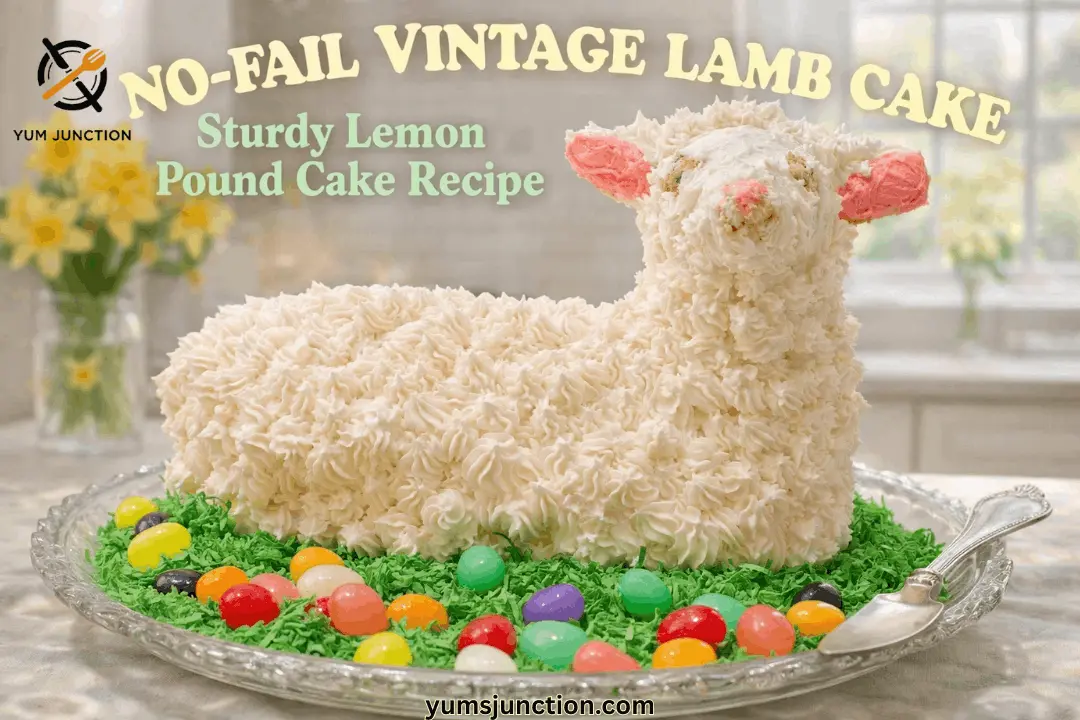
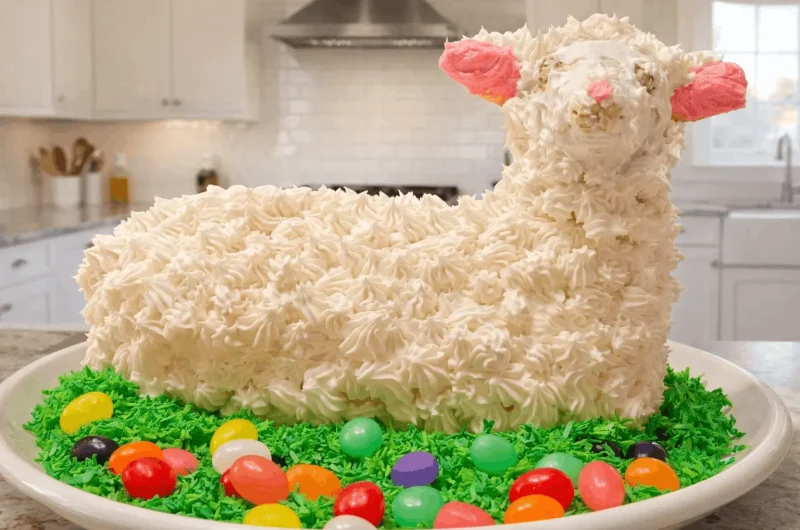
I’m going to make an Easter Lamb Cake! Seriously, I’m so excited. This is one of those vintage traditions that just makes the holiday feel complete.
We’re using a classic 3D lamb mold today. If you’ve never used one, don’t be intimidated—I’m going to walk you through the “moment of truth” so your lamb comes out looking like a centerpiece, not a disaster.
Table of Contents
Why You’ll Love This
- It’s a Showstopper: There is nothing quite like a 3D cake sitting in the middle of your Easter table. It screams tradition.
- Lemon-Kissed Flavor: We’re not just making a plain cake; we’re adding lemon zest and juice for a bright, fresh flavor.
- Sturdy but Delicious: This isn’t a flimsy sponge that falls apart. It’s a dense, moist pound cake designed to hold its shape so the head doesn’t roll off!
If you love this adorable lamb cake, also try my Cute Little Bird Nest Coconut Macaroons or Carrot Cake Loaf with Cream Cheese Frosting for more Easter table magic!
Special Equipment
- 3D Lamb Cake Mold (approx. 3-4 cup capacity)
- Bamboo skewer & Toothpicks (Essential for structure! Remove before serving)
- Pastry brush (for greasing)
- Baker’s twine (if your mold doesn’t have clips)
- Electric Mixer
- Piping bag with Star Tip (for the wool)
The Cake Batter
- ½ cup (1 stick / 113g) Unsalted butter, softened
- 1 cup (200g) Granulated sugar
- 2 Large eggs, room temperature
- 1 tsp Vanilla extract
- 1 tbsp Lemon juice & 1 tsp Lemon zest
- 1 ½ cups (190g) All-purpose flour
- ½ tsp Baking powder & ¼ tsp Baking soda
- ½ tsp Salt
- ½ cup (120ml) Buttermilk
For Mold Prep
- 2 tbsp Melted butter (or shortening) & 2 tbsp Flour
Decoration
- 2 cups White buttercream frosting
- Raisins or jelly beans (eyes/nose)
- Sweetened shredded coconut (optional)
Let’s Get Baking!
1. Prep the Mold (Don’t Skip This!)
Preheat your oven to 350°F (175°C).
This is the most critical part: you have to grease the mold thoroughly. Generously brush the entire inside of both mold halves with melted butter (or shortening). Go all around every nook and cranny—take your time with this! Dust it with flour afterwards; this ensures our cake comes out in one piece.
Tip: Turn it upside down and tap it to check your coverage. If you miss a spot, the lamb loses an ear!
2. Mix the Perfect Batter
In a stand mixer, cream the softened butter until it’s pale yellow (approx. 3 minutes). Add the sugar and salt. Beat on medium-high until the mixture increases in volume by about half and looks fluffy. Scrape down the bowl.
3. Add the Flavor
Add the eggs one at a time, beating well. Then comes the flavor: add the vanilla, lemon juice, and fresh lemon zest.
Don’t Panic: The mixture might look slightly curdled due to the acid in the lemon, but that is normal! It’ll all come together when you add the flour
4. Finish the Batter
Whisk your dry ingredients together in a separate bowl. Add the flour mixture to the butter mixture, alternating with the buttermilk. Mix on low just until incorporated. The batter should be thick.
5. Structural Integrity (The “Rebar”)
Pour the batter into the face-side (front) of the mold, filling it almost to the rim. Give it a nice tap on the counter to remove air pockets.
Now, for the secret engineering: Stabilize the head and neck. Break off a piece of a bamboo skewer and place it right in the neck area to give it structure. Place a toothpick into each ear area. This acts like “rebar” for the cake so the head doesn’t fall off later!
6. Close and Bake
Place the back half of the mold on top. If your mold snaps together, snap it. If not, tie it tightly with baker’s twine. Place on a baking sheet and bake for 50–60 minutes. Test doneness through steam vent with a toothpick.
7. The Moment of Truth (Unmolding)
This is always the scary part. Remove from the oven and let cool in the mold for exactly 10-15 minutes.
Carefully lift off the top (back) mold. It should lift right off. Let it cool another 10 minutes, then invert the rack and flip the lamb out to cool completely upright
8. Decorate
Once fully cool, use a dab of frosting to glue the lamb to your platter so it doesn’t slide around. Pipe stars of frosting all over the body to resemble wool (or use coconut). Add raisins or jelly beans for the eyes and nose. Remove skewer/toothpicks before serving!
And you have it—a beautiful Easter Lamb Cake!
If you love this lamb-inspired cake, pair it with savory Pistachio Crusted Lamb Chops for the ultimate Easter feast!
If you like this recipe Explore more recipes
FAQs
Why did my lamb’s head fall off?
This is the most common tragedy in Easter baking! It usually happens because the cake was too light (like a box mix sponge) or it lacked support. That’s why we use a denser pound cake batter and reinforce the neck with a bamboo skewer before baking. It acts like internal structure!
Can I use a regular cake mix in a lamb mold?
I wouldn’t recommend it. Standard box mixes are designed to be very light and airy. In a vertical 3D mold, they often collapse under their own weight. If you must use a box mix, add a box of instant pudding and an extra egg to make it denser.
How do I get the cake out without sticking?
The moment of truth depends on your prep. You have to be aggressive with the greasing! I use melted butter, but solid shortening works wonders too. Make sure you get into the nose and ear crevices, and always dust with flour (or fine breadcrumbs) after greasing.
What if my batter looks curdled after adding the lemon?
Don’t panic! The acid in the lemon juice can react with the butter and eggs, making it look separated. As soon as you add the flour, it will smooth right out into a beautiful, thick batter.
Vintage Lemon Pound Cake for Easter Lamb Mold
Course: DessertCuisine: Traditional AmericanDifficulty: Intermediate8-10
slices20
minutes1
hour350
kcal30
minutes1
hour50
minutesAn authentic, sturdy lemon pound cake recipe specifically designed for 3D lamb molds. Features a dense crumb that holds its shape and a bright citrus flavor.
Ingredients
- Equipment Needed:
3D Lamb Cake Mold (3-4 cup capacity)
Electric Mixer
Bamboo Skewers & Toothpicks (Remove before serving!)
Cooling Rack
Pastry Brush
- Ingredients:
- Cake Batter:
½ cup (113g) Unsalted Butter, softened
1 cup (200g) Granulated Sugar
2 Large Eggs, room temperature
1 tsp Vanilla Extract
1 tbsp Fresh Lemon Juice
1 tsp Lemon Zest
1½ cups (190g) All-Purpose Flour
½ tsp Baking Powder
¼ tsp Baking Soda
½ tsp Salt
½ cup (120ml) Buttermilk
- Mold Prep:
2 tbsp Melted butter (or shortening) + 2 tbsp Flour
- Decoration:
2 cups White buttercream frosting
Raisins or jelly beans (eyes/nose)
Sweetened shredded coconut (optional)
Directions
- Prep Mold: Preheat oven to 350°F. Thoroughly grease both halves of lamb mold with melted butter/shortening. Dust with flour, tap out excess.
- Cream Butter: Beat softened butter until pale (~3 min). Add sugar + salt, beat until fluffy and volume increases.
- Add Eggs/Flavor: Beat in eggs one at a time. Mix in vanilla, lemon juice, zest (may curdle—normal).
- Finish Batter: Whisk dry ingredients. Alternate adding dry + buttermilk to wet mix. Batter should be thick.
- Fill Mold: Pour into face-side of mold, almost to rim. Tap to remove bubbles.
- Structure: Insert bamboo skewer in neck, toothpicks in ears for support.
- Bake: Secure back mold (clips/twine). Bake on sheet 50-60 min. Test through steam vent.
- Unmold: Cool in mold 10-15 min. Remove back mold. Cool 10 more min, then flip onto rack.
- Decorate: Frost with stars/coconut for wool. Remove skewer/toothpicks. Add eyes/nose.
Notes
- Safety: Remove toothpicks/skewer before serving head/ear portions!
- Mold Prep: Solid shortening works best for vintage metal molds.
- Don’t Overfill: Leave ¼-½” rim at top.
- Box Mix: Add pudding mix + extra egg if substituting.
- Curdling: Lemon acid normal; flour fixes it.