
Super excited today for my Korean recipe. I love Korean food. People love Korean food because it’s spicy, it’s strong flavored, just kind of thing, you know? So I am making Kimchi Fried Rice, one of my absolute favorite Korean dishes. In Korean, that’s called Kimchi Bokkeumbap.
This recipe is super easy and delicious, definitely weeknight-friendly.
Why You’ll Love This
- It’s a Flavor Bomb: We’re talking spicy, tart, savory, and rich all at once. The kimchi brings the punch, and the pork jowl brings the richness.
- The Texture is Amazing: Using short-grain rice gives you that perfect chewiness, while the long beans add a fresh crunch.
- It’s Fast: Once your prep is done, this comes together in the wok in minutes.
- The Egg: That runny yolk over the spicy rice? It creams everything out and mellows the heat. It’s absolutely essential!
What You’ll Need
Special Equipment:
- Wok or Large Non-Stick Skillet: Essential for tossing the rice without making a mess.
- Spatula: For pressing down rice clumps.
Ingredients
The Base:
- Kimchi: 1 cup, well-fermented (sour is better!), chopped small.
- Kimchi Juice: ¼ cup (squeezed from the kimchi).
- Cooked Rice: 3 cups short-grain white rice.
- Oil: 1 tbsp vegetable oil (plus more for frying eggs).
The Sauce:
- Gochujang (Korean Chili Paste): 1 tbsp (heaping).
- Soy Sauce: 1 tsp (start here, add more to taste).
- Sesame Oil: 1 tbsp.
- Sugar: 1 tsp (to balance the acidity).
The Mix-ins:
- Pork Jowl: 150g (5 oz), thinly sliced (or bacon/pork belly).
- Long Beans: ½ cup, chopped into 1-inch pieces.
- Soy Sauce (for pork): 1 tsp.
The Toppings (Essential):
- Eggs: 2 large eggs.
- Sesame Seeds: Toasted, for garnish.
Let’s Get Cooking!
1. The Rice Rule (Pro Tip!)
For Korean food, you want to use short-grain rice (Japanese rice works perfectly). It glistens in the sauce and has a better chew than Jasmine rice.
Crucial Tip: Making fried rice, cook the rice with a little less water than usual. The sauce is quite liquidy, so if your rice is too wet, you’ll have a harder time. If you use less water, you don’t even have to wait for the rice to get cold—you can use it warm, right away!
2. Prep the Kimchi
I buy my kimchi from the store (usually the one with Napa cabbage and a bit of daikon radish). Here is the trick: Take the fermented kimchi and drain out the juice because we want to use that juice for the sauce. You need to really drain it out—push and get out every last bit! Then, chop up the drained kimchi into little fried-rice-friendly pieces.
3. Mix the Sauce
Take reserved kimchi juice (approx. 1/4 cup) and add the second most important ingredient: Gochujang (Korean red pepper paste). It’s this luscious, thick, rich umami paste that is good on, like, everything. Using the “Extra Hot” version, but you can use mild.
Add the toasted sesame oil, a little soy sauce (go easy at first!), and the sugar to balance out the sourness. Whisk it until smooth.
4. Sear the Protein & Veggies
Heat your oil in the wok. Add the pork jowl and cook until it’s nice and fatty and tender. Because if it’s so thin, you won’t get big chewy pieces. Add the long beans and a teaspoon of soy sauce. Stir fry until the pork is cooked and beans are crisp-tender.
5. Fry the Rice
Add your chopped kimchi to the wok and stir fry for a minute to get it hot. Then, dump in your cooked rice. Pour sauce all over the rice. Toss everything together, using your spatula to break up any clumps, until every grain is coated and glistening red.
6. The Finish
Fry your eggs separately. Serve the rice in bowls, top with the fried egg, and sprinkle with toasted sesame seeds. Break that yolk and dig in! Enjoy
checkout more recipes
- Unstuffed Cabbage Soup Will Warm Your Soul!
- Sticky-Sweet One-Pan Apricot Chicken & Pumpkin (Super Easy One-Pan Meal!)
- Super Quick & Easy Stir-Fried Napa Cabbage with Shrimp!
If you like this recipe Explore more recipes
FAQs
Do I have to use day-old cold rice?
Actually, no! Because the sauce is liquidy, I intentionally cook my fresh rice with a little less water so it’s firm. If you do this, you can use the rice while it’s still warm and fresh—no waiting required!
Can I use Jasmine rice instead of short-grain?
You can, but for the authentic Korean experience, short-grain (often sold as u0022sushi riceu0022 or u0022Calroseu0022) is best. It has a stickier, chewier texture that stands up really well to the thick sauce. Jasmine rice tends to be a bit too fluffy and dry for this style.
Is this dish very spicy?
It definitely has a kick! I use u0022Extra Hotu0022 gochujang, but you can buy mild versions. The sugar and the creamy egg yolk also help to mellow out the heat, so it’s a very balanced spicy.
What if I don’t eat pork?
No problem at all. You can use chicken, beef, or even canned tuna (which is very popular in Korea!). For a vegetarian version, use tofu or just add more mushrooms and veggies—just check your kimchi ingredients to ensure it doesn’t contain shrimp paste if you are strictly vegetarian.
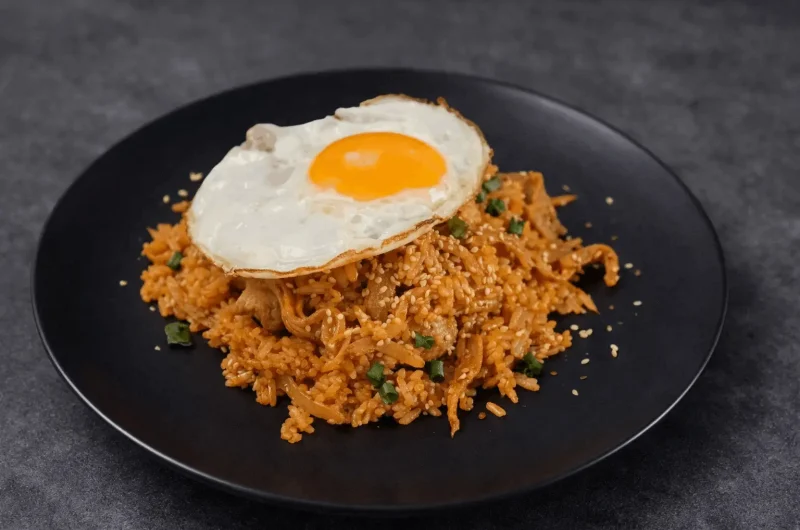
Kimchi Fried Rice (Kimchi Bokkeumbap)
Course: Main CourseCuisine: KoreanDifficulty: Easy2
servings15
minutes10
minutes550
kcal25
minutesA spicy, savory Korean classic made with pork jowl, crunchy long beans, and fermented kimchi. Topped with a sunny-side-up egg for the perfect creamy finish.
Ingredients
- Equipment Needed:
Wok or large skillet
Cutting board and knife
Spatula
- Ingredients:
3 cups Cooked short-grain rice (Japanese or Korean style)
1 cup Napa cabbage kimchi, chopped
¼ cup Kimchi juice (reserved from the jar)
150g Pork jowl or pork belly, thinly sliced
½ cup Long beans, cut into 1-inch pieces (optional)
1 tbsp Gochujang (Korean red pepper paste)
1 tbsp Toasted sesame oil
2 tsp Soy sauce (divided use)
1 tsp Sugar
1 tbsp Vegetable oil
2 Large eggs
1 tbsp Toasted white sesame seeds
Directions
- Prep the Kimchi: Squeeze the kimchi firmly to extract as much juice as possible. Reserve ¼ cup of this juice. Chop the drained kimchi into small, bite-sized pieces.
- Make the Sauce: In a small bowl with the reserved kimchi juice, whisk together the gochujang, sesame oil, 1 teaspoon of soy sauce, and the sugar until the gochujang is fully dissolved.
- Season the Pork: In a separate bowl, toss the sliced pork jowl with 1 teaspoon of soy sauce.
- Fry the Eggs: Heat a wok or skillet over medium-high heat with a little oil. Fry the eggs sunny-side up until the whites are set but the yolks are still runny and the edges are crispy brown. Remove eggs and set aside.
- Cook the Kimchi & Pork: Add the vegetable oil to the same wok (don’t wash it!). Add the chopped kimchi and stir-fry for 1-2 minutes to char it slightly. Add the pork jowl and let it sit for a moment to get a nice sear and render the fat. Stir-fry until the pork is about 80% cooked.
- Add Veggies: Toss in the long beans and stir-fry for 1 minute. You want them to stay crunchy.
- Combine & Fry: Add the rice to the pan. Pour the sauce mixture directly over the rice—this helps break up the clumps. Stir well, using a spatula to press down any lumps.
- Crisp the Rice: Crank the heat up to high. Spread the rice out and let it cook undisturbed for a minute to get some toasty, crispy bits at the bottom.
- Serve: Divide into bowls. Sprinkle generously with toasted sesame seeds and top each bowl with a fried egg.
Notes
- Rice Texture: If using fresh rice, cook it with 10-15% less water than usual. Mushy rice makes for gloopy fried rice! You can use the rice while it’s still warm.
- Salt Levels: Kimchi and gochujang brands vary wildly in saltiness. Stick to 1 tsp of soy sauce in the sauce initially, then taste the finished rice and add more only if needed.
- Substitutions: If you can’t find pork jowl, bacon or pork belly are excellent substitutes. You can also use chicken or tofu.